
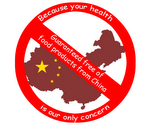
The president sent his Assistant Secretary of State to discuss human rights, and in response to the Chinese Communist Party's labor camps, one-child policy, and indiscriminate imprisonment of political prisoners, Assistant Secretary of State Michael Posner . . . apologized for an Arizona state law on immigration.
The Obama Administration has entered new territory in regards to its policy towards the Chinese Communist Party. The new way of doing things is mind-boggling, sickening, and outrageous (and lest anyone think I'm being partisan, Obama's Ambassador to the CCP - Jon Huntsman, who according to Posner's comments on Politico was in on the self-hate fest - was formerly the Republican Governor of Utah; if he's representative of the Utah GOP elite, then that's one more reason Senator Bob Bennett's campaign bit the dust). However, it is also very, very dangerous for several reasons. They are as follows.
It risks further harm on the political prisoners themselves: One comment I will always carry with me is from a speech Richard Gephardt gave when he declared his opposition to permanent free trade with the CCP. He talked about how sensitive the cadres were to outside criticism, so much so that the prisoners themselves could gauge how much flak the Party was getting - the more critics chirped, the nicer the guards were. Nonsense like this makes the cadres think they have a free hand to do whatever they'd like to their opponents behind bars - and when Chinese Communist hands are that free, they usually end up very bloody.
It demoralizes and confuses current dissidents: Does anyone think Hu Jia would be that upset over Arizona's attempt to battle illegal immigration? Think about it, an Arizona cop might ask Hu to show his green card if he's pulled over while driving within the state. Cadres in Henan province let as many as one million people die of AIDS and had Hu arrested for trying to expose them. How about Chen Guangcheng? The regime imprisoned and beat him for helping women violently abused by cadres enforcing the "one child" policy. Don't get me started on Falun Gong, independent Christians, or Hanyuan County.
What this nonsense out of Washington does is make these victims feel completely ignored by the one nation that should remember their plight. This will make it much harder for them to help the Chinese people take their country back.
It gives the CCP international prestige that it will use to enslave more people. After all, if the Chinese Communist Party is the same as the Arizona legislature, what's the big deal about the erosion of freedoms in Hong Kong? Or the invasion of Taiwan, should it happen (and I am increasingly convinced that it will)?
My last point doesn't deal with Arizona, but rather the larger context (which, as Jay Nordlinger ruefully notes, included American apologies about "crime, poverty, homelessness, and racial discrimination."
These comments reveal an appalling ignorance of reality in Communist China. Lest anyone forget, the Chinese Communist Party Member card is a license to steal. Outside of the Potemkin cities (Beijing, Shanghai, Hong Kong, and Shenzhen), China is mired in a poverty unimaginable in the United States. Millions are "relocated" due to land seizures by corrupt cadres. As for "racial discrimination," try being a Korean in Communist China - actually, on second thought, don't.
In the end, it all points to one thing: the Chinese Communist Party no longer has any reason to take America seriously. This will have catastrophic repercussions, be it with Taiwan (as mentioned), our enemies in Afghanistan and Iraq (who have been past receivers of Communist support), the mullahcracy in Iran (long the CCP's best friend in the Middle East), North Korea, or anywhere else.
Meanwhile, there was no mention of the long arm of lawlessness interfering with Chinese-Americans trying to exercise their political rights in this country, although this dangerous combination of repression and espionage has been unchallenged by Administrations in both political parties.
CCP-watchers have long since gotten used to dissapointments in Washington. No one who remembers the Clinton or Bush Administration were completely shocked when Obama went the "engagement" route. However, this president has been far more obsequious to Beijing than any other, and given the Ambassador, Obama's political opposition is hardly without blame.
There will come a time when the American people will demand a bona fide anti-Communist president, and (s)he will help bring down the CCP, but that future looks more expensive and, quite frankly, much bloodier today than it did even last week.
Cross-posted to the right-wing liberal and Virginia Virtucon
Showing posts with label Taiwan. Show all posts
Showing posts with label Taiwan. Show all posts
Monday, May 17, 2010


Thursday, February 18, 2010
The astonishingly resilient anti-Communist majority
CNN took advantage of today's meeting between President Obama and the Dalai Lama to conduct a poll on American attitudes toward the Chinese Communist Party. The results were a pleasant surprise, to say the least.
First, it should come as no surprise that the Dalai Lama is very well-liked in the United States. The rest of the poll regarding Tibet seems contradictory at first.
Again, that may sound contradictory, but we have to remember that the Dalai Lama himself repeatedly insists that he is not demanding independence, and he himself has been trying to build bridges to Zhongnanhai. The independence question aside, the American people are largely following the Dalai Lama's lead.
Meanwhile, as one would expect, human rights remains at the forefront of American thinking:
Where things get interesting is the "Taiwan question":
Read that again, slowly, and you'll see how dramatic a statement that is.
We're talking about Taiwan (a.k.a. the Republic of China), a subject so delicate even the anti-Communist community has to treat it with kid gloves. Making matters even more difficult, the solution most anti-Communists would prefer (an anti-Communist movement willing to help the mainland overthrow the CCP and then reunify with a democratic China) has vanished over the last few years do to event that have led to a Communist-friendly vs. anti-Communist/pro-independence polarization, with the latter also suffering from a serious corruption hangover that allowed the former to sweep the electoral field in 2007 and 2008.
On top of that, the poll asked about "taking a strong stand on Taiwan by force." In other words, the American people - in the midst of a two-pronged war against al Qaeda and the Great Recession - were asked about effectively going to war to protect the island democracy, with all of its troubles, against a would-be (and soon, will-be) superpower.
Despite all of this, the American people responded, "Sign me up."
This is the latest - and probably, the most dramatic - example of the American people's resilient anti-Communism. For much of the 1990's, a majority of Americans called the "China" a threat (they meant the CCP, trust me), but in part, that could have been Republican reaction to the Clinton Administration's "engagement" with the regime.
Now, in 2010, Republicans and Democrats have seen one of their own espouse "engagement" in the White House in an attempt to get Beijing's cooperation on their respective foreign policy objectives. Despite this, the anti-Communism did not wane. If anything, it became more resolute (I know of no poll that said Americans in the 1990s were willing to use military force to defend the ROC).
In the 1930's, the Democrats embraced anti-fascism: they completely dominated American politics until 1953. In the late 1970's, the Republicans firmly stood against European Communism. From 1980 to 2008, they were the driving force in American politics.
This poll confirms what I have said it before, and I am compelled to say it again: the party that embraces the anti-Communist majority will be the majority party in American politics for at least the next generation. If history is any indication, it will also lead the American and Chinese peoples to victory over the CCP.
What we still do not know - and had best figure out soon - is this: which party is it going to be? One could make the argument for either the Democrats or the Republicans. In fact, liberals and conservatives are more likely to be anti-Communists than moderates, further complicating not only partisan predictions but, more importantly, making it harder to build a political coalition.
However, this poll clearly shows that the coalition can be built, and events around the world show it must be built. The questions remain: when and who?
First, it should come as no surprise that the Dalai Lama is very well-liked in the United States. The rest of the poll regarding Tibet seems contradictory at first.
Nearly three-quarters of all Americans think Tibet should be an independent country, according to a new national poll.
However, the CNN/Opinion Research Corp. survey released Thursday also indicates that most Americans think it is more important to maintain good relations with China than to take a stand on Tibet.
Again, that may sound contradictory, but we have to remember that the Dalai Lama himself repeatedly insists that he is not demanding independence, and he himself has been trying to build bridges to Zhongnanhai. The independence question aside, the American people are largely following the Dalai Lama's lead.
Meanwhile, as one would expect, human rights remains at the forefront of American thinking:
The poll also indicates that 53 percent say it's more important for the United States to take a strong stand on human rights in China than to maintain good relations with Beijing, with 44 percent saying good relations are more important.
Where things get interesting is the "Taiwan question":
By a 6-point margin, the survey also shows that more Americans say taking a strong stand on Taiwan by force is more important than maintaining good relations with Beijing.
Read that again, slowly, and you'll see how dramatic a statement that is.
We're talking about Taiwan (a.k.a. the Republic of China), a subject so delicate even the anti-Communist community has to treat it with kid gloves. Making matters even more difficult, the solution most anti-Communists would prefer (an anti-Communist movement willing to help the mainland overthrow the CCP and then reunify with a democratic China) has vanished over the last few years do to event that have led to a Communist-friendly vs. anti-Communist/pro-independence polarization, with the latter also suffering from a serious corruption hangover that allowed the former to sweep the electoral field in 2007 and 2008.
On top of that, the poll asked about "taking a strong stand on Taiwan by force." In other words, the American people - in the midst of a two-pronged war against al Qaeda and the Great Recession - were asked about effectively going to war to protect the island democracy, with all of its troubles, against a would-be (and soon, will-be) superpower.
Despite all of this, the American people responded, "Sign me up."
This is the latest - and probably, the most dramatic - example of the American people's resilient anti-Communism. For much of the 1990's, a majority of Americans called the "China" a threat (they meant the CCP, trust me), but in part, that could have been Republican reaction to the Clinton Administration's "engagement" with the regime.
Now, in 2010, Republicans and Democrats have seen one of their own espouse "engagement" in the White House in an attempt to get Beijing's cooperation on their respective foreign policy objectives. Despite this, the anti-Communism did not wane. If anything, it became more resolute (I know of no poll that said Americans in the 1990s were willing to use military force to defend the ROC).
In the 1930's, the Democrats embraced anti-fascism: they completely dominated American politics until 1953. In the late 1970's, the Republicans firmly stood against European Communism. From 1980 to 2008, they were the driving force in American politics.
This poll confirms what I have said it before, and I am compelled to say it again: the party that embraces the anti-Communist majority will be the majority party in American politics for at least the next generation. If history is any indication, it will also lead the American and Chinese peoples to victory over the CCP.
What we still do not know - and had best figure out soon - is this: which party is it going to be? One could make the argument for either the Democrats or the Republicans. In fact, liberals and conservatives are more likely to be anti-Communists than moderates, further complicating not only partisan predictions but, more importantly, making it harder to build a political coalition.
However, this poll clearly shows that the coalition can be built, and events around the world show it must be built. The questions remain: when and who?
Thursday, January 28, 2010
A bitterly disappointing night
Last night, the leader of the free world and one of the most dynamic members of America's loyal opposition took to the airwaves to present their cases to the people. For anti-Communists, it was a terrible night.
Whether one was inclined to trust President Obama over Virginia Governor Bob McDonnell - or for independents, both and/or neither - the night was punctuated by the near-total silence on the dangerous rise of the Chinese Communist Party on the global stage. Admittedly, politicians don't like to give foreign policy does much attention during a recession - especially the Great Recession, as this one is now known. However, those who have risen above politics to embrace the mantle of true leadership have insisted on keeping their eyes, and ours, on the world around us to thwart the dangers with which we must deal.
Franklin Roosevelt mobilized America to resist the Nazi Empire despite the Great Depression. Ronald Reagan continued to lead the fight against European Communism despite the only recession since World War II to challenge this one in length and severity. Sadly, neither Obama (for whom, I will confess, I did not vote) nor McDonnell (for whom I did) seemed eager to follow in the footsteps of these two late leaders.
To the extent the president mentioned Communist China at all, it was as an economic competitor similar to India - latently invoking a China-India linkage that has been repeatedly debunked by reality. More ominously, the threat from Communist China itself was completely absent from the speech. There was no mention of the regime's ties to our enemies in the War on Terror (or as it is now known, "Overseas Contingency Operations"), nor any mention of the continuing military threat to the island democracy known as the Republic of China (despite recent reports that he has approved a new arms package for the ROC, as reported by CBS News). Even the CCP's continuing currency manipulation - which has done more to damage American manufacturing than anyone is willing to admit - received deafening silence from the president.
When the president mentioned foreign policy at all, he simply recycled the Pollyannaish words of his predecessor on North Korea and the Iranian mullahs. Does he really believe the Stalinist Korean regime "faces increased isolation and stronger sanctions . . . vigorously enforced"? Has he really convinced himself that the Iranian regime "is more isolated"? The only way the president can say these words with a straight face is if he believes what Zhongnanhai tells him about these two regimes. However, Zhongnanhai has always told presidents that they're willing to work with Washington on these issues; they just have their own definition of "work with Washington."
It is painfully ironic to see a president so determined to lay blame at the feet of his predecessor simply following the Bush line in the one area where a departure from the past would do the most good.
In response to the president, the Republicans brought forth Bob McDonnell, recently elected Governor of Virginia. As a Virginian myself, I saw McDonnell's campaign up close, and as I mentioned earlier, I liked enough of what I saw to vote for him. However, foreign policy was not and is not his area of expertise, and as such, he gave scant mention to it. Unlike the president, he never even mentioned North Korea or Iran, let alone the CCP.
Now, one might think I'm being a little harsh on the president and the governor, given the current times. However, geopolitics don't simply stop for the free world to recover its economic balance. In fact, our enemies - from the CCP on down - have used recessions, depressions, or panics to take advantage of the free world and out-muscle it wherever possible. The 21st Century is no exception.
Nor is the largely domestic careers of the two politicians any excuse. In the 20th Century, America won two World Wars and one Cold War. In all three cases, the dynamic leadership required for victory came from governors (Woodrow Wilson - New Jersey, FDR - New York, and Reagan - California).
What we saw last night was not merely reflective of two men; it was a symptom of the continuing elite notion that the CCP is a "rival" at worst, a "potential partner" at best. That the CCP is in fact an enemy is hardly considered. That is the root of the free world's problem, and if last night is any indication, it will remain a problem for a long time.
Whether one was inclined to trust President Obama over Virginia Governor Bob McDonnell - or for independents, both and/or neither - the night was punctuated by the near-total silence on the dangerous rise of the Chinese Communist Party on the global stage. Admittedly, politicians don't like to give foreign policy does much attention during a recession - especially the Great Recession, as this one is now known. However, those who have risen above politics to embrace the mantle of true leadership have insisted on keeping their eyes, and ours, on the world around us to thwart the dangers with which we must deal.
Franklin Roosevelt mobilized America to resist the Nazi Empire despite the Great Depression. Ronald Reagan continued to lead the fight against European Communism despite the only recession since World War II to challenge this one in length and severity. Sadly, neither Obama (for whom, I will confess, I did not vote) nor McDonnell (for whom I did) seemed eager to follow in the footsteps of these two late leaders.
To the extent the president mentioned Communist China at all, it was as an economic competitor similar to India - latently invoking a China-India linkage that has been repeatedly debunked by reality. More ominously, the threat from Communist China itself was completely absent from the speech. There was no mention of the regime's ties to our enemies in the War on Terror (or as it is now known, "Overseas Contingency Operations"), nor any mention of the continuing military threat to the island democracy known as the Republic of China (despite recent reports that he has approved a new arms package for the ROC, as reported by CBS News). Even the CCP's continuing currency manipulation - which has done more to damage American manufacturing than anyone is willing to admit - received deafening silence from the president.
When the president mentioned foreign policy at all, he simply recycled the Pollyannaish words of his predecessor on North Korea and the Iranian mullahs. Does he really believe the Stalinist Korean regime "faces increased isolation and stronger sanctions . . . vigorously enforced"? Has he really convinced himself that the Iranian regime "is more isolated"? The only way the president can say these words with a straight face is if he believes what Zhongnanhai tells him about these two regimes. However, Zhongnanhai has always told presidents that they're willing to work with Washington on these issues; they just have their own definition of "work with Washington."
It is painfully ironic to see a president so determined to lay blame at the feet of his predecessor simply following the Bush line in the one area where a departure from the past would do the most good.
In response to the president, the Republicans brought forth Bob McDonnell, recently elected Governor of Virginia. As a Virginian myself, I saw McDonnell's campaign up close, and as I mentioned earlier, I liked enough of what I saw to vote for him. However, foreign policy was not and is not his area of expertise, and as such, he gave scant mention to it. Unlike the president, he never even mentioned North Korea or Iran, let alone the CCP.
Now, one might think I'm being a little harsh on the president and the governor, given the current times. However, geopolitics don't simply stop for the free world to recover its economic balance. In fact, our enemies - from the CCP on down - have used recessions, depressions, or panics to take advantage of the free world and out-muscle it wherever possible. The 21st Century is no exception.
Nor is the largely domestic careers of the two politicians any excuse. In the 20th Century, America won two World Wars and one Cold War. In all three cases, the dynamic leadership required for victory came from governors (Woodrow Wilson - New Jersey, FDR - New York, and Reagan - California).
What we saw last night was not merely reflective of two men; it was a symptom of the continuing elite notion that the CCP is a "rival" at worst, a "potential partner" at best. That the CCP is in fact an enemy is hardly considered. That is the root of the free world's problem, and if last night is any indication, it will remain a problem for a long time.
Thursday, January 21, 2010
Tom Friedman and the elite point of view, revisited
Tom Friedman had another column out this week on Communist China - although it was somewhat disguised as a rant against the "War on Terror." Friedman makes it clear he would simply prefer the war go away; I prefer the term Wahabbist-Ba'athist-Khomeinist War, but that's not entirely relevant here. More to the point, Friedman's column reveals two things: first, the viewpoint of the Washington "elite" - which usually is very close to his own thinking - and second, the complete ignorance he, and they, have of the world around them.
We'll begin with an issue I normally don't discuss - the chimera of "energy independence." Friedman insists that "nothing would make us more secure" than becoming "independent of imported oil." This is a near-universal error among the chattering classes - and, sadly, much of the American people. It is, however, based on two seriously mistaken assumptions. The first is that most of America's oil imports come from the Middle East, and therefore enabling our enemies (the Wahabbists, Ba'athists, and Khomeinists, hence the term I use for this war). In fact, the our largest source of foreign oil has been - for six years and counting - Canada. Moreover, if present trends continue, by mid-decade the Great White North will export more oil to us than all of the Middle Eastern nations put together.
Secondly, and far more troubling, is Friedman's ignorance (shared by far too many people) of just where al Qaeda has received support over the years. In fact, the Chinese Communist Party has been an armer or funder of the Iranian mullahcracy, al Qaeda, Saddam Hussein, the Taliban, and Stalinist North Korea. Yet for some reason, Friedman ignores this, and he's not alone. Hardly anyone in the corridors of power in the free world have paid proper attention to the role the CCP has played in this war - namely, as a benefactor of our enemies. Then again, if more of them accepted the fact that it is a war, they might pay more attention.
The important point is this: the United States of America could stop importing oil tomorrow, and it wouldn't even slow our enemies down. It could, however, knock the Canadian economy back into recession. Good thinking there, Tom!
Having gotten so much about the geopolitical realities of the world wrong, Friedman's other mistakes really shouldn't surprise. Still, amidst the wreckage, there is one jaw-dropper:
So many errors, so little time.
First of all, despite the sweet talk of Ma Ying-jeou and Hu Jintao, the CCP is still aiming hundreds of missiles at Taiwan. The island democracy is just as threatened today as it was before Ma was elected two years ago. In fact, the Taiwanese people themselves seem to understand that better than their President - confronted with Ma's rose-colored-glasses policy, they have actually done the unthinkable and resurrected the much-maligned Democratic Progressive Party as a functioning opposition.
More to the point, the Taiwanese people have, in fact, depended upon the United States for decades. Two generations ago, President Eisenhower threatened nuclear war with Mao Zedong to protect Taiwan. A quarter-century later, the Taiwan Relations Act compelled America to ensure Taiwan had the ability and strength to defend itself.
I don't want to be too hard on Tom. He seems to be coming to the realization (however slowly), that the CCP is a genuine threat. He's not there yet, but I can see him making the journey. Unfortunately, his ignorance of the globe's past and present is hindering his ability to make the trip. More ominously, most of the free world's decision makers have the same blind spots that he does. That is a problem the electorates (i.e., you and me) need to fix - and quickly.
We'll begin with an issue I normally don't discuss - the chimera of "energy independence." Friedman insists that "nothing would make us more secure" than becoming "independent of imported oil." This is a near-universal error among the chattering classes - and, sadly, much of the American people. It is, however, based on two seriously mistaken assumptions. The first is that most of America's oil imports come from the Middle East, and therefore enabling our enemies (the Wahabbists, Ba'athists, and Khomeinists, hence the term I use for this war). In fact, the our largest source of foreign oil has been - for six years and counting - Canada. Moreover, if present trends continue, by mid-decade the Great White North will export more oil to us than all of the Middle Eastern nations put together.
Secondly, and far more troubling, is Friedman's ignorance (shared by far too many people) of just where al Qaeda has received support over the years. In fact, the Chinese Communist Party has been an armer or funder of the Iranian mullahcracy, al Qaeda, Saddam Hussein, the Taliban, and Stalinist North Korea. Yet for some reason, Friedman ignores this, and he's not alone. Hardly anyone in the corridors of power in the free world have paid proper attention to the role the CCP has played in this war - namely, as a benefactor of our enemies. Then again, if more of them accepted the fact that it is a war, they might pay more attention.
The important point is this: the United States of America could stop importing oil tomorrow, and it wouldn't even slow our enemies down. It could, however, knock the Canadian economy back into recession. Good thinking there, Tom!
Having gotten so much about the geopolitical realities of the world wrong, Friedman's other mistakes really shouldn't surprise. Still, amidst the wreckage, there is one jaw-dropper:
Has anyone noticed the most important peace breakthrough on the planet in the last two years? It’s right here: the new calm in the Strait of Taiwan. For decades, this was considered the most dangerous place on earth, with Taiwan and China pointing missiles at each other on hair triggers. Well, over the past two years, China and Taiwan have reached a quiet rapprochement — on their own. No special envoys or shuttling secretaries of state. Yes, our Navy was a critical stabilizer. But they worked it out. They realized their own interdependence. The result: a new web of economic ties, direct flights and student exchanges.
A key reason is that Taiwan has no oil, no natural resources. It’s a barren rock with 23 million people who, through hard work, have amassed the fourth-largest foreign currency reserves in the world. They got rich digging inside themselves, unlocking their entrepreneurs, not digging for oil. They took responsibility. They got rich by asking: “How do I improve myself?” Not by declaring: “It’s all somebody else’s fault. Give me a handout.”
So many errors, so little time.
First of all, despite the sweet talk of Ma Ying-jeou and Hu Jintao, the CCP is still aiming hundreds of missiles at Taiwan. The island democracy is just as threatened today as it was before Ma was elected two years ago. In fact, the Taiwanese people themselves seem to understand that better than their President - confronted with Ma's rose-colored-glasses policy, they have actually done the unthinkable and resurrected the much-maligned Democratic Progressive Party as a functioning opposition.
More to the point, the Taiwanese people have, in fact, depended upon the United States for decades. Two generations ago, President Eisenhower threatened nuclear war with Mao Zedong to protect Taiwan. A quarter-century later, the Taiwan Relations Act compelled America to ensure Taiwan had the ability and strength to defend itself.
I don't want to be too hard on Tom. He seems to be coming to the realization (however slowly), that the CCP is a genuine threat. He's not there yet, but I can see him making the journey. Unfortunately, his ignorance of the globe's past and present is hindering his ability to make the trip. More ominously, most of the free world's decision makers have the same blind spots that he does. That is a problem the electorates (i.e., you and me) need to fix - and quickly.
Wednesday, January 13, 2010
On the Google Incident
The hacking of Google, and the firm's decision to re-evaluate its entire operation in Communist China (h/t to NRO - The Corner) , may lead to dramatic changes on several levels, including bringing the day of liberation closer than before Google made its announcement. That may sound dramatic, but I believe it to be true. To understand why, let's take this step by step.
We'll start with the purpose of the attack on Google: "accessing the Gmail accounts of Chinese human rights activists." The first lesson we - and everyone else - can learn is this: any foreign business in Communist China will become part of the regime's surveillance system - whether they want to be or not. Ethan Gutmann has done a terrific job detailing how low the American business community had fallen in Losing the New China. In those cases, however, the firms were more than willing to help the cadres find and seize anti-Communists. In this case, Google clearly assumed (like most investors and businesses) that they would be "non-political." They found out the hard way that there is no such thing as non-political in Communist China. Current and future investors will take note, and hopefully make some very different decisions based upon this.
There is one line of thought that Google's decision is driven more by dollars and cents than common sense or moral outrage (see Sarah Lacy at Tech Crunch). In its own way, however, even this is good news, in part because the thrust of Lacy's column (revealed in this question: "Does anyone really think Google would be doing this if it had top market share in the country?") completely misses the point. The CCP will ensure Google will never win "top market share." Foreign business aren't supposed to succeed; they're supposed to throw good money after bad into Communist China while the CCP finds their intellectual property and robs them blind (again, Gutmann is a fantastic source). That hasn't stopped so many from dreaming of profits and "one billion customers." Google is no different.
What Google's action tells us is something about the American information technology sector: aiding repression is still considered bad business. We weren't sure if the old hyper-libertarian impulse that had been with the IT sector since its birth was still around. Now we know it is. This means it will be much harder for the CCP to convince Google's rivals or its successors to take its place as a dissident tracker (no one can claim they didn't see it coming anymore).
Given the fallout that is coming from this, why would the CCP risk losing so many investors - present and future - with this move? Well, here's the final (and most important lesson) here: The CCP cares about its preservation and its power first, last, and always. Economics, diplomacy, and everything else are just means to the above end. No one can claim otherwise. No one can be fooled by the CCP propaganda that they peddle about its "peaceful rise" and its supposed concern about economic growth above all else.
In short - to borrow and twist the famous line from The Usual Suspects - the devil can no longer convince the world that he doesn't exist.
This is something that will be remembered with every CCP acquisition abroad, every CCP foray into international politics. The elites of free world may finally began to view the CCP with the suspicion it deserves (the peoples of the free world have that suspicion already). However, this could be most damaging in the area it first started - outside investments in Communist China.
The CCP needs outside investors for a slew of reasons: the money, of course, the de facto endorsement that comes with an investment, and the new friends that can be used as apologists. As I have noted repeatedly, the CCP needs affirmation from outside to justify its regime to the suffering people inside. Without the former, the latter becomes that much harder (one of the lessons learned from European Communism in the 1980s), and getting more of the former took a major hit with Google's announcement yesterday.
Yes, the regime will survive if Google finally does withdraw, but it will be weakened, and with Iran in turmoil, anti-Communists gaining momentum in Taiwan, and India growing more leery of Zhongnanhai, the CCP cannot afford any more weakness.
We'll start with the purpose of the attack on Google: "accessing the Gmail accounts of Chinese human rights activists." The first lesson we - and everyone else - can learn is this: any foreign business in Communist China will become part of the regime's surveillance system - whether they want to be or not. Ethan Gutmann has done a terrific job detailing how low the American business community had fallen in Losing the New China. In those cases, however, the firms were more than willing to help the cadres find and seize anti-Communists. In this case, Google clearly assumed (like most investors and businesses) that they would be "non-political." They found out the hard way that there is no such thing as non-political in Communist China. Current and future investors will take note, and hopefully make some very different decisions based upon this.
There is one line of thought that Google's decision is driven more by dollars and cents than common sense or moral outrage (see Sarah Lacy at Tech Crunch). In its own way, however, even this is good news, in part because the thrust of Lacy's column (revealed in this question: "Does anyone really think Google would be doing this if it had top market share in the country?") completely misses the point. The CCP will ensure Google will never win "top market share." Foreign business aren't supposed to succeed; they're supposed to throw good money after bad into Communist China while the CCP finds their intellectual property and robs them blind (again, Gutmann is a fantastic source). That hasn't stopped so many from dreaming of profits and "one billion customers." Google is no different.
What Google's action tells us is something about the American information technology sector: aiding repression is still considered bad business. We weren't sure if the old hyper-libertarian impulse that had been with the IT sector since its birth was still around. Now we know it is. This means it will be much harder for the CCP to convince Google's rivals or its successors to take its place as a dissident tracker (no one can claim they didn't see it coming anymore).
Given the fallout that is coming from this, why would the CCP risk losing so many investors - present and future - with this move? Well, here's the final (and most important lesson) here: The CCP cares about its preservation and its power first, last, and always. Economics, diplomacy, and everything else are just means to the above end. No one can claim otherwise. No one can be fooled by the CCP propaganda that they peddle about its "peaceful rise" and its supposed concern about economic growth above all else.
In short - to borrow and twist the famous line from The Usual Suspects - the devil can no longer convince the world that he doesn't exist.
This is something that will be remembered with every CCP acquisition abroad, every CCP foray into international politics. The elites of free world may finally began to view the CCP with the suspicion it deserves (the peoples of the free world have that suspicion already). However, this could be most damaging in the area it first started - outside investments in Communist China.
The CCP needs outside investors for a slew of reasons: the money, of course, the de facto endorsement that comes with an investment, and the new friends that can be used as apologists. As I have noted repeatedly, the CCP needs affirmation from outside to justify its regime to the suffering people inside. Without the former, the latter becomes that much harder (one of the lessons learned from European Communism in the 1980s), and getting more of the former took a major hit with Google's announcement yesterday.
Yes, the regime will survive if Google finally does withdraw, but it will be weakened, and with Iran in turmoil, anti-Communists gaining momentum in Taiwan, and India growing more leery of Zhongnanhai, the CCP cannot afford any more weakness.
Thursday, January 07, 2010
Looking back, looking ahead
On this side of the Pacific (the east side), January is the beginning of the new year; on its western shores, it is close to the end of the old one. This gives us the perfect opportunity to look back and look ahead at the same time.
From one perspective, the anti-Communist had a very bad 2009 (for those readers suffering from pun withdrawal, one could say democracy supporters were quite gored in the Year of the Ox). A new Democratic president - Barack Obama - turned his back on nearly everything his predecessor did, except for "engagement" with the Chinese Communist Party. Meanwhile, the potential for the new Republican opposition in America to rediscover its anti-Communist past disappeared when Obama appointed Utah Governor Mike Huntsman to the post of Ambassador to the CCP. For the rest of the year, the Communist regime was largely ignored in Washington - not necessarily a bad thing, but it could have been much better. House Speaker Nancy Pelosi particularly disappointed with her near silence on the issue when there was never a better time for her to influence the debate in the capital.
Moving past the politicians and into the punditry, things actually got worse. What began as a discussion about global warming devolved into leading columnists pining for tyranny. Tom Friedman gushed over the "reasonably enlightened" CCP in a piece that should have embarrassed him. Canadian writer Diane Francis did Friedman one better by actually endorsing a global version of the hideous "one child" policy that made Zhongnanhai infamous around the world.
As all of this was going on, the regime seemed on the march across the globe. Beijing alone had the thrill of publishing good economic statistics (whether they were actually true statistics is for another column). More leaders of the free world - including Canada - seemed willing to do its bidding. Its chief Middle Eastern ally (the Iranian mullahcracy) moved closer to becoming a nuclear power. Its one-time Taliban allies were turning the tide in Afghanistan.
All in all, it's been a very good year for the CCP - on the surface. Scratch said surface, however, and it's a very different story.
While the American elite fell all over itself in praise of the regime, the American people maintained, and even increased, their wariness of Zhongnanhai. By the end of the year, even some of the "chattering classes" began to realize that the CCP's "peaceful rise" was anything but.
Meanwhile, the motivation for Tehran's hellbent quest for "the bomb" suddenly became known to the world: the Iranian people. Their continued defiance of the mullahcracy inspired the world, but it also sent a powerful message on the limits of dictatorship. About a decade ago, (First) Cold War historian John Lewis Gaddis reminded us that oppressed people do have the power to force their oppressors to spend financial and political capital keeping the regime in place - and Tehran had to spend massive amounts of it. We saw the effects in Lebanon, where the pro-democracy March 14 movement scored an upset victory in national elections, and to a lesser extent in Iraq, where previous Iranian meddling seemed to ebb as the regime was forced to turn inward.
Given that the CCP's anti-American objectives and policies have largely been outsourced to Tehran - in part because the mullahs are so willing to credit for them and get the CCP off the hook - weakness in Iran means weakness in Zhongnanhai. Moreover, the regime can't look at the convulsions in Iran without worrying about the Chinese people rising up to take their country back.
Finally, even in Taiwan, things went south for the regime. While the CCP-friendly Kuomintang governed without any threat for much of the year, the voters in the island democracy brought the anti-Communist Democratic Progressives back to life in local elections last month. This time last year, President Ma Ying-jeou was a popular leader of a people seemingly willing to reach out to the Communists over the future of the Republic of China. Today, Ma is the leader of the Republic of China; the rest no longer holds.
So what can we expect in 2010? It's hard to say, but I think we'll know where to look: Iran. The resistance of the Iranian people will continue to spook Beijing and Tehran, while forcing both to ignore opportunities elsewhere. Meanwhile, the mullahs quest for nuclear weapons (which in no small part is fueled by a need to have the free world knuckle under and accept their repression of their fellow Iranians) will lead to more problematic headlines for the CCP.
Of course, if the Iranian people succeed in ending the mullahcracy, that could send shockwaves through tyrannies around the world - especially the CCP.
From one perspective, the anti-Communist had a very bad 2009 (for those readers suffering from pun withdrawal, one could say democracy supporters were quite gored in the Year of the Ox). A new Democratic president - Barack Obama - turned his back on nearly everything his predecessor did, except for "engagement" with the Chinese Communist Party. Meanwhile, the potential for the new Republican opposition in America to rediscover its anti-Communist past disappeared when Obama appointed Utah Governor Mike Huntsman to the post of Ambassador to the CCP. For the rest of the year, the Communist regime was largely ignored in Washington - not necessarily a bad thing, but it could have been much better. House Speaker Nancy Pelosi particularly disappointed with her near silence on the issue when there was never a better time for her to influence the debate in the capital.
Moving past the politicians and into the punditry, things actually got worse. What began as a discussion about global warming devolved into leading columnists pining for tyranny. Tom Friedman gushed over the "reasonably enlightened" CCP in a piece that should have embarrassed him. Canadian writer Diane Francis did Friedman one better by actually endorsing a global version of the hideous "one child" policy that made Zhongnanhai infamous around the world.
As all of this was going on, the regime seemed on the march across the globe. Beijing alone had the thrill of publishing good economic statistics (whether they were actually true statistics is for another column). More leaders of the free world - including Canada - seemed willing to do its bidding. Its chief Middle Eastern ally (the Iranian mullahcracy) moved closer to becoming a nuclear power. Its one-time Taliban allies were turning the tide in Afghanistan.
All in all, it's been a very good year for the CCP - on the surface. Scratch said surface, however, and it's a very different story.
While the American elite fell all over itself in praise of the regime, the American people maintained, and even increased, their wariness of Zhongnanhai. By the end of the year, even some of the "chattering classes" began to realize that the CCP's "peaceful rise" was anything but.
Meanwhile, the motivation for Tehran's hellbent quest for "the bomb" suddenly became known to the world: the Iranian people. Their continued defiance of the mullahcracy inspired the world, but it also sent a powerful message on the limits of dictatorship. About a decade ago, (First) Cold War historian John Lewis Gaddis reminded us that oppressed people do have the power to force their oppressors to spend financial and political capital keeping the regime in place - and Tehran had to spend massive amounts of it. We saw the effects in Lebanon, where the pro-democracy March 14 movement scored an upset victory in national elections, and to a lesser extent in Iraq, where previous Iranian meddling seemed to ebb as the regime was forced to turn inward.
Given that the CCP's anti-American objectives and policies have largely been outsourced to Tehran - in part because the mullahs are so willing to credit for them and get the CCP off the hook - weakness in Iran means weakness in Zhongnanhai. Moreover, the regime can't look at the convulsions in Iran without worrying about the Chinese people rising up to take their country back.
Finally, even in Taiwan, things went south for the regime. While the CCP-friendly Kuomintang governed without any threat for much of the year, the voters in the island democracy brought the anti-Communist Democratic Progressives back to life in local elections last month. This time last year, President Ma Ying-jeou was a popular leader of a people seemingly willing to reach out to the Communists over the future of the Republic of China. Today, Ma is the leader of the Republic of China; the rest no longer holds.
So what can we expect in 2010? It's hard to say, but I think we'll know where to look: Iran. The resistance of the Iranian people will continue to spook Beijing and Tehran, while forcing both to ignore opportunities elsewhere. Meanwhile, the mullahs quest for nuclear weapons (which in no small part is fueled by a need to have the free world knuckle under and accept their repression of their fellow Iranians) will lead to more problematic headlines for the CCP.
Of course, if the Iranian people succeed in ending the mullahcracy, that could send shockwaves through tyrannies around the world - especially the CCP.
Thursday, November 19, 2009
A dangerous paradigm shift
This past week, the anti-Communist community came to grips with the painful reality best described by this summary of the Greek tragedy genre: "Be careful what you wish for, you just might get it."
After spending nearly ten years trying to warn my fellow Americans about the dangers of the Chinese Communist Party (and compared to some of the giants in the movement, I'm still a rookie), it is becoming clear that the "chattering classes" finally recognize the danger (a majority of Americans have always understood the problem). Unfortunately, the mood in the corridors of power and punditry have shifted not to firm resolve to resist the CCP, but mordant despair over its eventual conquest of the world.
The best (or, perhaps, worst) example of the gloom and doom comes from John Tkacik, a leading anti-Communist himself and a longtime defender of the island democracy currently on Taiwan (National Review Online):
Now, not everyone is as glum as Tkacik, but most have a similar theme, driven by either criticism of the Obama Administration (which is justified) or concern over CCP-held American debt (which is badly overblown). Thus, I am now forced to shift gears myself, and remind everyone that things really aren't that bad.
True, the obsequiousness of the president is deeply disturbing, but that's not just for anti-Communists (see Victor Davis Hanson, also in NRO, for the overall details). America's allies are starting to notice the trend in other areas, too, and are not happy (America in the World, UK). Moreover, while "engagement" has become a standard lunacy among American presidents over the last two decades, the Obama version is so bad that even "engagement" luminaries such as the Financial Times (also UK) are telling the president that he "need not – and must not – kowtow" (via AITW).
In fact, the FT even goes so far as to detonate the myth of the CCP's power as American creditor: "Contrary to common perception, China’s huge holdings of US treasuries are not a sign of great strength. They are evidence of how dependent Chinese growth has been on the US consumer." I take a somewhat different angle in my view on the subject, but any comments that steer clear of unnecessary pessimism is welcome at this point.
In reality, America is weak toward the CCP because President Obama chooses to be weak. For the democracy on Taiwan - which is facing both a likely invasion deadline of 2012 and its own lack of resolve - this isn't very consoling. The American people, however, have available a simple solution - replace Obama with an anti-Communist president. Whether any Republicans or other Democrats are willing to embrace the anti-Communist model is another question, but Obama's errors here make it much more likely.
Indeed, the recent election results in New Jersey hint to a second, and still underemphasized, reason for optimism: India. Even the FT took note of India's role as "a potential regional counterweight to China." Now, I've been talking about the geopolitical importance of India for years, but if what Michael Barone (DC Examiner) is any indication, Indian-Americans may be shifting to the Republicans. This will give the GOP more reason to emphasize India's role in the world. Democrats, if they're wise, will likely follow suit (lest anyone forget, the first notion of upending Communist regimes in Eastern Europe came from Republican candidates desperate to peel immigrants from said countries away from the Democrats in the 1950s). As more Americans become aware that there are three superpowers rather than two - and that the "third" is a far better fit with the free world than the CCP - they will realize their strength, and demand leaders act upon said strength.
Last but most, we need to remember the adversary: the Chinese Communist Party. Yes, it is bloodthirsty, ruthless, and very effective is presenting the veneer of respectable calm across Chinese and occupied territory. In the final piece of irony, it is John Derbyshire (author of the pessimism manifesto titled We Are Doomed), who reminds us of our reasons for hope:
In other words, between America and the CCP, America is the weakest - except for the CCP.
So, while we can shake our heads at the Obama Administration's mistakes, and cringe as the CCP takes advantage of them, the fundamentals have not really changed. The CCP is still a regime hiding its weaknesses from itself and everyone else, while America and the rest of the free world has strengths that remain unacknowledged - or even ignored - but won't disappear.
After all, how many of us on December 31, 1979 would even dare dream that European Communism would be crushed just a dozen years later?
After spending nearly ten years trying to warn my fellow Americans about the dangers of the Chinese Communist Party (and compared to some of the giants in the movement, I'm still a rookie), it is becoming clear that the "chattering classes" finally recognize the danger (a majority of Americans have always understood the problem). Unfortunately, the mood in the corridors of power and punditry have shifted not to firm resolve to resist the CCP, but mordant despair over its eventual conquest of the world.
The best (or, perhaps, worst) example of the gloom and doom comes from John Tkacik, a leading anti-Communist himself and a longtime defender of the island democracy currently on Taiwan (National Review Online):
As the smoke clears from President Obama’s 2009 Asia tour, America’s new status as the second-most powerful nation on earth is no longer obscured. It is the measure of a superpower that nobody else tells it what to do, but America is no longer the superpower. It is now China whom no one dares lecture.
The Obama administration has failed to muster the leverage necessary to gain China’s cooperation on any of its global priorities: nuclear proliferation, climate change, trade, exchange rates, human rights, competition for resources, environmental despoliation, or moderating China’s territorial claims against its neighbors — most of which are America’s friends and allies.
It simply is not credible in Beijing that Obama’s Washington has the courage to come up with an “or else” if China insists on pursuing its goals via a robust state-mercantilist ideology. So Beijing now does what it will, and will lecture the U.S. president if it pleases.
This was evident in Obama’s handling of the Tibet issue. He dared not meet with his fellow Nobel Laureate, the Dalai Lama, because China was not pleased. In his comments to Chinese leaders, Obama reassured them that the United States recognizes that Tibet is part of the People’s Republic of China,” without pausing to consider that China claims 32,000 square miles of Indian territory — the state of Arunachal Pradesh — as “part of Tibet.” Clearly, President Obama sees his challenge as managing America’s decline gracefully.
Now, not everyone is as glum as Tkacik, but most have a similar theme, driven by either criticism of the Obama Administration (which is justified) or concern over CCP-held American debt (which is badly overblown). Thus, I am now forced to shift gears myself, and remind everyone that things really aren't that bad.
True, the obsequiousness of the president is deeply disturbing, but that's not just for anti-Communists (see Victor Davis Hanson, also in NRO, for the overall details). America's allies are starting to notice the trend in other areas, too, and are not happy (America in the World, UK). Moreover, while "engagement" has become a standard lunacy among American presidents over the last two decades, the Obama version is so bad that even "engagement" luminaries such as the Financial Times (also UK) are telling the president that he "need not – and must not – kowtow" (via AITW).
In fact, the FT even goes so far as to detonate the myth of the CCP's power as American creditor: "Contrary to common perception, China’s huge holdings of US treasuries are not a sign of great strength. They are evidence of how dependent Chinese growth has been on the US consumer." I take a somewhat different angle in my view on the subject, but any comments that steer clear of unnecessary pessimism is welcome at this point.
In reality, America is weak toward the CCP because President Obama chooses to be weak. For the democracy on Taiwan - which is facing both a likely invasion deadline of 2012 and its own lack of resolve - this isn't very consoling. The American people, however, have available a simple solution - replace Obama with an anti-Communist president. Whether any Republicans or other Democrats are willing to embrace the anti-Communist model is another question, but Obama's errors here make it much more likely.
Indeed, the recent election results in New Jersey hint to a second, and still underemphasized, reason for optimism: India. Even the FT took note of India's role as "a potential regional counterweight to China." Now, I've been talking about the geopolitical importance of India for years, but if what Michael Barone (DC Examiner) is any indication, Indian-Americans may be shifting to the Republicans. This will give the GOP more reason to emphasize India's role in the world. Democrats, if they're wise, will likely follow suit (lest anyone forget, the first notion of upending Communist regimes in Eastern Europe came from Republican candidates desperate to peel immigrants from said countries away from the Democrats in the 1950s). As more Americans become aware that there are three superpowers rather than two - and that the "third" is a far better fit with the free world than the CCP - they will realize their strength, and demand leaders act upon said strength.
Last but most, we need to remember the adversary: the Chinese Communist Party. Yes, it is bloodthirsty, ruthless, and very effective is presenting the veneer of respectable calm across Chinese and occupied territory. In the final piece of irony, it is John Derbyshire (author of the pessimism manifesto titled We Are Doomed), who reminds us of our reasons for hope:
Let us bear in mind that those (economic) growth rates are based on an economic model that may already have ceased to be tenable (see Gordon Chang in the November 23 issue of National Review); that Chinese weapons, now as in the past, are intended for use against those inhabitants, or recalcitrant ex-inhabitants, of the Celestial Empire who will not bow to the Son of Heaven; that Chinese diplomats excel mainly at making their nation disliked; that resentments of class and wealth inequality can sunder a nation as surely as can ethnic troubles; and that the median duration of a Chinese dynasty has been 45 years.
In other words, between America and the CCP, America is the weakest - except for the CCP.
So, while we can shake our heads at the Obama Administration's mistakes, and cringe as the CCP takes advantage of them, the fundamentals have not really changed. The CCP is still a regime hiding its weaknesses from itself and everyone else, while America and the rest of the free world has strengths that remain unacknowledged - or even ignored - but won't disappear.
After all, how many of us on December 31, 1979 would even dare dream that European Communism would be crushed just a dozen years later?
Thursday, September 03, 2009
The week that was
By any indication, this was a week that began just awfully for anti-Communists. Yet, as it comes to an end, it may be the CCP itself who rues the seven days.
The week began (badly) in Japan, where Taro Aso - the latest and possibly most passionate in a line of anti-Communist Japanese premiers that included Junichiro Koizumi and Shinzo Abe - became the first Liberal Democrat in sixteen years (and arguably the first in over fifty) to suffer an outright defeat at the hands of the voters. The newly empowered Democratic Party of Japan (DPJ) has been spouting about moving away from the United States and closer to the Chinese Communist Party for years. Now, with a hammerlock on Japan's House of Representatives, they can form the government for the first time in history.
The next day brought a double-whammy: the family of Chen Shui-bian (former President of Taiwan and former leader of the anti-Communist Democratic Progressive Party) were convicted of perjury in his corruption trial. Chen himself will hear his verdict in about a week (Epoch Times); a conviction is all but certain. Meanwhile, Petrochina put in a nearly $2-billion bid for a major Albertan oil project, possibly turning North America's alternative to Middle Eastern oil into Beijing's overseas resource center.
All in all, the week looked horrific - and it was only Monday.
In fact, however, that was the whole point: the week still had five days left. Much as you don't declare the football game over at half-time, one cannot declare a week a disaster just two days in. On the contrary, as the week wore on, it started to wear a little better.
While the anti-Communist leaders were reeling from the Chen drama in Taiwan, the anti-Communist populace were making their presence known. President Ma Ying-jeou continued to take it on the chin politically on several fronts, while the presence of the Dalai Lama (whom Ma could not dare to ban from the island democracy) brought out the worst in the CCP - and reminded all who live on Taiwan just what reunification under Zhongnanhai would mean (Central News Agency). Much like the Republicans here have sprung back to life with the departure of George W. Bush, recent events on Taiwan make clear the anti-Communist DPP could have a revival of its own once the Chens leave the scene (voluntarily or otherwise).
The situation in Japan also improved - or to be more precise, it was revealed to be better than originally thought. For all the DPJ talk of moving closer to Beijing, one glaring obstacle stares them dead in the face - the choatic House of Councillors (known as the "upper house"). While the outgoing LDP lost control of that chamber in 2007, the DPJ doesn't control it either. Instead, it will have to rely on smaller parties from left and right - the latter will likely be nonplussed with any serious move in Beijing's direction. Until new Councillor elections next year, any new move in foreign policy could lead to trouble, which is why the triumphant DPJ is suddenly talking down any references to them.
Even the situation in Canada improved, and not just because the anti-Communists in the country began rousing themselves to take on their former friends in the governing Conservative Party (Calgary Herald). The bigger news may have come from the Gulf of Mexico, where a massive oil reservoir was discovered deep underground (Washington Post). While it will be a while before the field brings oil to the market, there is already talk of its effect on world oil prices. This could dampen the dollars enough for the Tories in Ottowa to clear their heads and give the Petrochina deal the long, painful look it deserves.
Meanwhile, word leaked out to the Epoch Times that the latest attempt by the cadres to pilfer state-owned assets and line their pockets had been met with a labor strike in Hunan Province - a telling reminder that the CCP's ongoing struggle to silence and dominate its own people continues to run into problems.
Of course, we have no idea how any of these items will resolve themselves, but we can be more optimistic about them than we could have been earlier in the week. While no one is really sure who coined the phrase "a week is a lifetime in politics" (the late UK Prime Minister Harold Wilson came close with the British subdued/deadpan version "a week is a long time in politics"), they were certainly validated this week.
The week began (badly) in Japan, where Taro Aso - the latest and possibly most passionate in a line of anti-Communist Japanese premiers that included Junichiro Koizumi and Shinzo Abe - became the first Liberal Democrat in sixteen years (and arguably the first in over fifty) to suffer an outright defeat at the hands of the voters. The newly empowered Democratic Party of Japan (DPJ) has been spouting about moving away from the United States and closer to the Chinese Communist Party for years. Now, with a hammerlock on Japan's House of Representatives, they can form the government for the first time in history.
The next day brought a double-whammy: the family of Chen Shui-bian (former President of Taiwan and former leader of the anti-Communist Democratic Progressive Party) were convicted of perjury in his corruption trial. Chen himself will hear his verdict in about a week (Epoch Times); a conviction is all but certain. Meanwhile, Petrochina put in a nearly $2-billion bid for a major Albertan oil project, possibly turning North America's alternative to Middle Eastern oil into Beijing's overseas resource center.
All in all, the week looked horrific - and it was only Monday.
In fact, however, that was the whole point: the week still had five days left. Much as you don't declare the football game over at half-time, one cannot declare a week a disaster just two days in. On the contrary, as the week wore on, it started to wear a little better.
While the anti-Communist leaders were reeling from the Chen drama in Taiwan, the anti-Communist populace were making their presence known. President Ma Ying-jeou continued to take it on the chin politically on several fronts, while the presence of the Dalai Lama (whom Ma could not dare to ban from the island democracy) brought out the worst in the CCP - and reminded all who live on Taiwan just what reunification under Zhongnanhai would mean (Central News Agency). Much like the Republicans here have sprung back to life with the departure of George W. Bush, recent events on Taiwan make clear the anti-Communist DPP could have a revival of its own once the Chens leave the scene (voluntarily or otherwise).
The situation in Japan also improved - or to be more precise, it was revealed to be better than originally thought. For all the DPJ talk of moving closer to Beijing, one glaring obstacle stares them dead in the face - the choatic House of Councillors (known as the "upper house"). While the outgoing LDP lost control of that chamber in 2007, the DPJ doesn't control it either. Instead, it will have to rely on smaller parties from left and right - the latter will likely be nonplussed with any serious move in Beijing's direction. Until new Councillor elections next year, any new move in foreign policy could lead to trouble, which is why the triumphant DPJ is suddenly talking down any references to them.
Even the situation in Canada improved, and not just because the anti-Communists in the country began rousing themselves to take on their former friends in the governing Conservative Party (Calgary Herald). The bigger news may have come from the Gulf of Mexico, where a massive oil reservoir was discovered deep underground (Washington Post). While it will be a while before the field brings oil to the market, there is already talk of its effect on world oil prices. This could dampen the dollars enough for the Tories in Ottowa to clear their heads and give the Petrochina deal the long, painful look it deserves.
Meanwhile, word leaked out to the Epoch Times that the latest attempt by the cadres to pilfer state-owned assets and line their pockets had been met with a labor strike in Hunan Province - a telling reminder that the CCP's ongoing struggle to silence and dominate its own people continues to run into problems.
Of course, we have no idea how any of these items will resolve themselves, but we can be more optimistic about them than we could have been earlier in the week. While no one is really sure who coined the phrase "a week is a lifetime in politics" (the late UK Prime Minister Harold Wilson came close with the British subdued/deadpan version "a week is a long time in politics"), they were certainly validated this week.
Wednesday, June 03, 2009
Twenty Years Later
So here we are, at another June 4 that much of the rest of the world won’t notice. It is all the more painful here in the West in that this anniversary – the 20th is one of our more important ones. It will hurt to see those who so bravely gave their lives be so cruelly forgotten.
The irony here – and one we must remember – is that this year, more than any other except perhaps for 1989 itself, we can truly say that those who were murdered did not die in vain. For whatever the rest of the world thinks of the Tiananmen Square bloodbath, the Chinese Communist Party is more afraid of it than it has ever been.
It would seem odd that this would be so. After all, the cadres have spent the last two decades erasing the Tiananmen Spring from local history books, and have rather brilliantly co-opted the previously non-Communist elite into the regime. Likewise, they seem to have convinced much of the rest of the world to move on and embrace the “new” China of the 21st Century. However, below the surface, it’s abundantly clear that the pressures that led the people to take to the streets in 1989 have never really gone away. They just went underground, and thus have become the cadres’ obsession.
We remember the students of 1989, but the CCP also remembers the laborers, farmers, pensioners, and other ordinary Chinese who joined the demonstrations (yes, that’s plural – it’s believed that 1 in 10 Chinese citizens joined some demonstration in hundreds of cities and towns that year). The cadres knew how to handle the intellectuals: a dose of radical nationalism and a slew of licenses-to-steal (otherwise known as Party Cards) did much of the trick. Thus, Beijing appears the model of peace and tranquility – to locals and outsiders.
Go beyond Beijing, Shanghai, Hong Kong, or Shenzhen, however, and it’s a different story. The anger, fear, and frustrations are still there, met not with kind words and incentives but party-sanctioned violence and corruption. In fact, the CCP pyramid scheme used to win over the intellectuals in the cities actually made the situation in the countryside worse – since it was peasants and laborers who were forced to pay for the CCP’s plans.
This is the real reason Tiananmen – even today – must remain buried in the past: too many people outside the cities remember what really happened, and have no interest in forgetting. We who live and work outside China rarely see this, in no small part because the cadres cannot afford to let us. Much like the hard-line Communists in Europe saw their regimes collapse when the outside world noticed the people’s anger, so, too, would the CCP if the foreign approval upon which it depends turned into wishing – and helping – the Chinese take their country back.
So, to prevent this, the cadres have to make sure June 4 passes by quietly – or, to be more accurate, that something else distracts our attention. For years, it hasn’t taken very much (a late Presidential primary, the proximity of the D-Day anniversary, etc.). This year, however, the anniversary so spooked the cadres that they apparently allowed (and perhaps even encouraged) their Korean colony to become a nuclear power – a rather large role of the dice that, if they’re not careful, could lead to more Americans and others catching on to the ruse.
That the CCP felt compelled to let Kim Jong-il frighten the entire free world, spin South Korea permanently away from the pro-Beijing “sunshine” of the last decade, and nearly inject an unexpected hawkishness into the Obama Administration is a sign of just how desperate the regime wanted the Tiananmen anniversary off the front pages. If they remain that scared of the 20-year-old crackdown, lovers of freedom cannot be completely discouraged.
Moreover, despite what the CCP would have us believe, the future is actually bright for anti-Communists. After two decades of prosperity-fueled corruption, the regime is facing a recession that could leave tens of millions of Party Members without the ill-gotten perks to which they think they are entitled. India and the United States have moved closer than at any time in 40 years, while CCP ally Pakistan is losing credibility in Washington faster than it’s losing territory to the Taliban. Japan and South Korea are now firmly in the anti-Communist camp, and even Taiwan, despite the Communist-friendly Nationalist government, seems to be returning to its anti-Communist roots.
All the while, the historical symbol of bloody repression hangs everywhere. Invisible but undeniable, it reminds tens of millions of Chinese that there was, once, a different path, and makes laughable every effort by the CCP to make it go away. With what the regime felt it had to do to keep the past away, we can truly see that it (the past) is still strong enough to guide the present and the future.Communism in China will fall; the only question remains: how much time, blood, and treasure must be lost before it does? That question can only be answered by those who helped accelerate the end of European Communism but, for now, have yet to do the same to Chinese Communism – namely, us.
Cross-posted to the right-wing liberal and Virginia Virtucon
The irony here – and one we must remember – is that this year, more than any other except perhaps for 1989 itself, we can truly say that those who were murdered did not die in vain. For whatever the rest of the world thinks of the Tiananmen Square bloodbath, the Chinese Communist Party is more afraid of it than it has ever been.
It would seem odd that this would be so. After all, the cadres have spent the last two decades erasing the Tiananmen Spring from local history books, and have rather brilliantly co-opted the previously non-Communist elite into the regime. Likewise, they seem to have convinced much of the rest of the world to move on and embrace the “new” China of the 21st Century. However, below the surface, it’s abundantly clear that the pressures that led the people to take to the streets in 1989 have never really gone away. They just went underground, and thus have become the cadres’ obsession.
We remember the students of 1989, but the CCP also remembers the laborers, farmers, pensioners, and other ordinary Chinese who joined the demonstrations (yes, that’s plural – it’s believed that 1 in 10 Chinese citizens joined some demonstration in hundreds of cities and towns that year). The cadres knew how to handle the intellectuals: a dose of radical nationalism and a slew of licenses-to-steal (otherwise known as Party Cards) did much of the trick. Thus, Beijing appears the model of peace and tranquility – to locals and outsiders.
Go beyond Beijing, Shanghai, Hong Kong, or Shenzhen, however, and it’s a different story. The anger, fear, and frustrations are still there, met not with kind words and incentives but party-sanctioned violence and corruption. In fact, the CCP pyramid scheme used to win over the intellectuals in the cities actually made the situation in the countryside worse – since it was peasants and laborers who were forced to pay for the CCP’s plans.
This is the real reason Tiananmen – even today – must remain buried in the past: too many people outside the cities remember what really happened, and have no interest in forgetting. We who live and work outside China rarely see this, in no small part because the cadres cannot afford to let us. Much like the hard-line Communists in Europe saw their regimes collapse when the outside world noticed the people’s anger, so, too, would the CCP if the foreign approval upon which it depends turned into wishing – and helping – the Chinese take their country back.
So, to prevent this, the cadres have to make sure June 4 passes by quietly – or, to be more accurate, that something else distracts our attention. For years, it hasn’t taken very much (a late Presidential primary, the proximity of the D-Day anniversary, etc.). This year, however, the anniversary so spooked the cadres that they apparently allowed (and perhaps even encouraged) their Korean colony to become a nuclear power – a rather large role of the dice that, if they’re not careful, could lead to more Americans and others catching on to the ruse.
That the CCP felt compelled to let Kim Jong-il frighten the entire free world, spin South Korea permanently away from the pro-Beijing “sunshine” of the last decade, and nearly inject an unexpected hawkishness into the Obama Administration is a sign of just how desperate the regime wanted the Tiananmen anniversary off the front pages. If they remain that scared of the 20-year-old crackdown, lovers of freedom cannot be completely discouraged.
Moreover, despite what the CCP would have us believe, the future is actually bright for anti-Communists. After two decades of prosperity-fueled corruption, the regime is facing a recession that could leave tens of millions of Party Members without the ill-gotten perks to which they think they are entitled. India and the United States have moved closer than at any time in 40 years, while CCP ally Pakistan is losing credibility in Washington faster than it’s losing territory to the Taliban. Japan and South Korea are now firmly in the anti-Communist camp, and even Taiwan, despite the Communist-friendly Nationalist government, seems to be returning to its anti-Communist roots.
All the while, the historical symbol of bloody repression hangs everywhere. Invisible but undeniable, it reminds tens of millions of Chinese that there was, once, a different path, and makes laughable every effort by the CCP to make it go away. With what the regime felt it had to do to keep the past away, we can truly see that it (the past) is still strong enough to guide the present and the future.Communism in China will fall; the only question remains: how much time, blood, and treasure must be lost before it does? That question can only be answered by those who helped accelerate the end of European Communism but, for now, have yet to do the same to Chinese Communism – namely, us.
Cross-posted to the right-wing liberal and Virginia Virtucon
Tuesday, May 26, 2009
I guess Iran just wasn't ready
I must confess that I was surprised to hear that the Stalinist regime in northern Korea had conducted a nuclear test (BBC), especially when it occurred to me where we are on the calendar (less than two weeks out from the Tiananmen Square anniversary). Until yesterday, I had always assumed it was the Iranian mullahcracy who would conduct a test at this time. I can only assume that the mullahs just weren't ready yet.
Whatever reasons the Stalinists had for conducting the test can and will be analyzed and debated around the world and throughout the world wide web. However, we must not forget to examine why the Chinese Communist Party allowed it to happen - and make no mistake; this sort of thing does not happen unless it was run by the CCP. For the answer to this question, we must go back to the calendar.
I write this on May 26; in roughly a week and a half, the twentieth anniversary of the Tiananmen massacre will be upon us. It was the one anniversary that scared the cadres more than any other - not because it alone could threaten the regime, but because it could aid or even set in motion a chain of events that could lead to the regime's downfall in the future. This is why I assumed that the Iranian mullahcracy - the CCP's strongest ally in the Middle East - would gladly take attention away from Beijing with a nuclear test.
Instead, Kim Jong-il seized the honor, but for the cadres, the main effect is the same. This test assures Beijing that Tiananmen Square will be nowhere near the front page on June 4, 2009. In fact, the CCP will likely see more democratic leaders praise it for trying to restrain its Korean colony, while insisting no one has the right to push the regime on touchy domestic issues while it is busy with the critical task of bringing Kim Jong-il et al into line.
To get an idea how this will play out, take a look at House Speaker Nancy Pelosi's utterly forgettable trip to meet with CCP leaders. For years, Pelosi was one of the very few members of Congress who understood the danger the CCP posed to the world. Now, flushy with power and allies in the White House, she has fallen for the "engagement" nonsense and has gone instead - hat in hand - to talk about climate change, an issue in which the CCP can once again look "responsible" without doing anything except pull the wool over the eyes of politicians who know better.
It will be the same with Korea. Already, the regime is calling for "coolheaded and appropriate" (Voice of America) action - i.e., don't do anything to risk the Korean colony. Keep in mind, the CCP has had plenty of opportunities to solve this problem all by itself. Yet it has instead chosen to prop up Kim even as he starved his own people and threatened his neighbors (I would even say it has preserved him because he threatened his neighbors, but more on that later). We must also remember that Beijing voted for sanctions against its colony in the past - only to announce it wouldn't enforce them hours later. In short, the Chinese Communist Party has never been serious about keeping Kim Jong-il in check.
Why? The reason is simple: Kim doesn't threaten Beijing; he only threatens the United States and America's allies, which makes him immensely useful. Moreover, he is more than willing to take full blame for his actions in the world community, knowing that Beijing's backing ensures that he can survive the ever growing pile of hollow words. Thus, the CCP gets the benefit of a distracted and scared free world with none of the consequences of having a hand in the distracting and scaring. The CCP even ends up watching the democratic world beg it to fix the mess that it created.
In other words, the CCP allows Kim Jong-il to behave like this because they want him to behave like this. Until that changes, he will keep this up, to the point of actually helping terrorists acquire the weapons they need to do us grievous harm.
If we truly wish to have the Korean colony reined in, we'll have to go over their heads. We'll have to make sure Beijing suffers immediate consequences for this: things like the revocation of Permanent Normal Trade Relations, talks with Japan and South Korea about deploying domestic nuclear deterrents (Japan will likely be more receptive to that than South Korea, but the offer should be made), a permanent American naval presence in the South China Sea, and perhaps even a revival of the American defense pact with the Republic of China (currently on Taiwan). The CCP has been using North Korea to distract us for nearly two decades; we need to create and push our own distractions against them.
However, that cannot be all we do. We must also make clear that any act of nuclear terrorism against America, her interests, or her allies, will be taken as an act of war by the CCP against the United States. Whether it's al Qaeda, the Taliban, the Iranian mullahs, the Kimist regime in northern Korea, or anyone in between, nearly every terrorist state or entity has been blessed with support from the CCP. Zhongnanhai must be told in no uncertain terms that we will bear the CCP personally responsible (as opposed to China in general) for actions that any of them take against us.
Finally, we must come to terms with the painful but unavoidable truth: America and her allies will never be secure until China is free. Our enemies in the War on Terror will, if defeated, simply be replaced by other ones as quickly as the CCP get find ambitious people who hate America as much as Beijing fears her. North Korea is, in many respects, the first and last evidence we should need on this. It is time we recognize that we are fighting - and must win - the Second Cold War.
Whatever reasons the Stalinists had for conducting the test can and will be analyzed and debated around the world and throughout the world wide web. However, we must not forget to examine why the Chinese Communist Party allowed it to happen - and make no mistake; this sort of thing does not happen unless it was run by the CCP. For the answer to this question, we must go back to the calendar.
I write this on May 26; in roughly a week and a half, the twentieth anniversary of the Tiananmen massacre will be upon us. It was the one anniversary that scared the cadres more than any other - not because it alone could threaten the regime, but because it could aid or even set in motion a chain of events that could lead to the regime's downfall in the future. This is why I assumed that the Iranian mullahcracy - the CCP's strongest ally in the Middle East - would gladly take attention away from Beijing with a nuclear test.
Instead, Kim Jong-il seized the honor, but for the cadres, the main effect is the same. This test assures Beijing that Tiananmen Square will be nowhere near the front page on June 4, 2009. In fact, the CCP will likely see more democratic leaders praise it for trying to restrain its Korean colony, while insisting no one has the right to push the regime on touchy domestic issues while it is busy with the critical task of bringing Kim Jong-il et al into line.
To get an idea how this will play out, take a look at House Speaker Nancy Pelosi's utterly forgettable trip to meet with CCP leaders. For years, Pelosi was one of the very few members of Congress who understood the danger the CCP posed to the world. Now, flushy with power and allies in the White House, she has fallen for the "engagement" nonsense and has gone instead - hat in hand - to talk about climate change, an issue in which the CCP can once again look "responsible" without doing anything except pull the wool over the eyes of politicians who know better.
It will be the same with Korea. Already, the regime is calling for "coolheaded and appropriate" (Voice of America) action - i.e., don't do anything to risk the Korean colony. Keep in mind, the CCP has had plenty of opportunities to solve this problem all by itself. Yet it has instead chosen to prop up Kim even as he starved his own people and threatened his neighbors (I would even say it has preserved him because he threatened his neighbors, but more on that later). We must also remember that Beijing voted for sanctions against its colony in the past - only to announce it wouldn't enforce them hours later. In short, the Chinese Communist Party has never been serious about keeping Kim Jong-il in check.
Why? The reason is simple: Kim doesn't threaten Beijing; he only threatens the United States and America's allies, which makes him immensely useful. Moreover, he is more than willing to take full blame for his actions in the world community, knowing that Beijing's backing ensures that he can survive the ever growing pile of hollow words. Thus, the CCP gets the benefit of a distracted and scared free world with none of the consequences of having a hand in the distracting and scaring. The CCP even ends up watching the democratic world beg it to fix the mess that it created.
In other words, the CCP allows Kim Jong-il to behave like this because they want him to behave like this. Until that changes, he will keep this up, to the point of actually helping terrorists acquire the weapons they need to do us grievous harm.
If we truly wish to have the Korean colony reined in, we'll have to go over their heads. We'll have to make sure Beijing suffers immediate consequences for this: things like the revocation of Permanent Normal Trade Relations, talks with Japan and South Korea about deploying domestic nuclear deterrents (Japan will likely be more receptive to that than South Korea, but the offer should be made), a permanent American naval presence in the South China Sea, and perhaps even a revival of the American defense pact with the Republic of China (currently on Taiwan). The CCP has been using North Korea to distract us for nearly two decades; we need to create and push our own distractions against them.
However, that cannot be all we do. We must also make clear that any act of nuclear terrorism against America, her interests, or her allies, will be taken as an act of war by the CCP against the United States. Whether it's al Qaeda, the Taliban, the Iranian mullahs, the Kimist regime in northern Korea, or anyone in between, nearly every terrorist state or entity has been blessed with support from the CCP. Zhongnanhai must be told in no uncertain terms that we will bear the CCP personally responsible (as opposed to China in general) for actions that any of them take against us.
Finally, we must come to terms with the painful but unavoidable truth: America and her allies will never be secure until China is free. Our enemies in the War on Terror will, if defeated, simply be replaced by other ones as quickly as the CCP get find ambitious people who hate America as much as Beijing fears her. North Korea is, in many respects, the first and last evidence we should need on this. It is time we recognize that we are fighting - and must win - the Second Cold War.
Thursday, May 21, 2009
The CCP's Illusion of a good week
Over the weekend, President Obama chose Utah Governor Jon Huntsman as his Ambassador to the Chinese Communist regime (Washington Post). Most of the analysis on this side of the Pacific has focused on the domestic politics of the move (Huntsman is a Republican and was considered a strong possibility to be Obama's opponent in 2012). Far less time has been spent examining the international implications - mainly due to the assumption that Hunstman's appointment typifies the pervasive "engagement" mentality among the political establishment (for more on that, see Agence France Presse via Yahoo). Still, one would have to assume that a Democratic President being able to pick off a high-profile Republican to advance "engagement" in Beijing would make it a good week for the CCP. If so, one would be wrong.
For starters, Hunstman's Ambassadorship makes any 2012 campaign almost impossible for him. This actually increases the possibility that the Republicans look to an anti-Communist as their nominee in 2012. How much is hard to say - if a week is a lifetime in American politics, 2012 might as well be an eon or two in the future - but removing a telegenic defender of "engagement" from the presidential field certainly can't be good for the CCP and its cronies.
More importantly, the Huntsman appointment does nothing to alleviate the numerous internal and external problems the CCP faces, some of which are the CCP's own doing, and one of which - by far the most problematic - hits close to home.
First, there is the regime's continued military buildup and geopolitical expansion - both of which are necessary to justify the regime's existence to the Chinese people, but neither of which are exactly neighborly. As the Communist military boasts of its latest achievements (United Press Int'l) and tries to extend the CCP's reach into the hotly disputed South China Sea (Bloomberg), the United States - engagement or not engagement - is beginning to get nervous (Arstechnica). More ominously for the Communists, the US is largely responding to this by developing closer ties with India (Times of India).
Even outside military and territorial matters, foreign affairs is increasingly more foreign. Whatever one may think of the new Administration's efforts to reduce carbon emissions, it has put the CCP in the unusual (and uncomfortable) position of taking it on the rhetorical chin from American environmentalists and their left-of-center allies, such as Paul Krugman in the New York Times.
Then there's the economic front, where the cadres are suffering the worst of both worlds. Outwardly, there is growing alarm at what the Communists could do to the American economy (London Telegraph), making "engagement" all the harder to sell to a beleaguered (and already skeptical) American public. Inwardly, however, all of the signs of a quick recovery - to say nothing of a return to the white-hot days of the last decade - have vanished. Foreign investment is way off (Wall Street Journal). Hong Kong is suffering its worst economic contraction since the "Asian flu" of the 1990s (Financial Times). Meanwhile, the regime's attempt to reverse this is leading to comparisons not with the the CCP's go-go era, but the American housing bubble (Bloomberg).
As for the regime's ominous hints of ending its binge on U.S. Treasury notes, it's not happening (AFP via Google); the powerlessness of credit continues to thwart the CCP. Rather, it is American investors unloading Communist-controlled assets as fast as they can (Wall Street Journal).
Of course, the release of Zhao Ziyang's memoirs (Wall Street Journal) is sure to cause some heartburn in Zhongnanhai; although, like John Pomfret, I don't think the regime will suffer too much. It's not as if they didn't see this coming, and any genuine reformers were purged from the regime long ago. Still, it will remind the Chinese people (those who can get a hold of the book) and the rest of the world that the continuing abuses of human rights by the regime (Asia News and Religious Intelligence is the rule rather than the exceptions.
The biggest threat to the regime's plans, however, has arisen on the island democracy just across the Taiwan Straits.
As the Associated Press reported, at least 100,000 Taiwanese/free Chinese marched in opposition to ROC President Ma Ying-jeou's own "engagement" policies with the Communists (Yahoo). By itself, a protest doesn't mean much (Zhao's memoirs will, ironically, confirm that, too). However, the march is symbolic of increasing nervousness on the island democracy about Ma's olive branch to the CCP. At least one poll had more Taiwanese disapproving of Ma's performance in office than approving (AP via eTaiwanNews) - an outcome driven largely by concern over Ma giving away the store to Beijing.
A new American Ambassador can't make this problems go away (heck, American Presidents have tried to help the CCP win over the Taiwanese people - with disastrous results). Despite the Obama Administration's acceleration of "engagement," the rest of the world continues to get nervous about the Chinese Communist regime - especially those closest to it. That tension will likely continue to grow as the regime - bereft of the economic growth needed to assuage even the tens of millions of party members - bets even more heavily on radical nationalism and growing geopolitical power to survive.
Thus, the American people will be more likely to seek out anti-Communist leaders in 2010 and 2012 - and one the regime's best chances to head that off in the Republican presidential nomination contest was just taken out of the picture. In time, the CCP may rue their supposed good fortune over the Huntsman selection.
For starters, Hunstman's Ambassadorship makes any 2012 campaign almost impossible for him. This actually increases the possibility that the Republicans look to an anti-Communist as their nominee in 2012. How much is hard to say - if a week is a lifetime in American politics, 2012 might as well be an eon or two in the future - but removing a telegenic defender of "engagement" from the presidential field certainly can't be good for the CCP and its cronies.
More importantly, the Huntsman appointment does nothing to alleviate the numerous internal and external problems the CCP faces, some of which are the CCP's own doing, and one of which - by far the most problematic - hits close to home.
First, there is the regime's continued military buildup and geopolitical expansion - both of which are necessary to justify the regime's existence to the Chinese people, but neither of which are exactly neighborly. As the Communist military boasts of its latest achievements (United Press Int'l) and tries to extend the CCP's reach into the hotly disputed South China Sea (Bloomberg), the United States - engagement or not engagement - is beginning to get nervous (Arstechnica). More ominously for the Communists, the US is largely responding to this by developing closer ties with India (Times of India).
Even outside military and territorial matters, foreign affairs is increasingly more foreign. Whatever one may think of the new Administration's efforts to reduce carbon emissions, it has put the CCP in the unusual (and uncomfortable) position of taking it on the rhetorical chin from American environmentalists and their left-of-center allies, such as Paul Krugman in the New York Times.
Then there's the economic front, where the cadres are suffering the worst of both worlds. Outwardly, there is growing alarm at what the Communists could do to the American economy (London Telegraph), making "engagement" all the harder to sell to a beleaguered (and already skeptical) American public. Inwardly, however, all of the signs of a quick recovery - to say nothing of a return to the white-hot days of the last decade - have vanished. Foreign investment is way off (Wall Street Journal). Hong Kong is suffering its worst economic contraction since the "Asian flu" of the 1990s (Financial Times). Meanwhile, the regime's attempt to reverse this is leading to comparisons not with the the CCP's go-go era, but the American housing bubble (Bloomberg).
As for the regime's ominous hints of ending its binge on U.S. Treasury notes, it's not happening (AFP via Google); the powerlessness of credit continues to thwart the CCP. Rather, it is American investors unloading Communist-controlled assets as fast as they can (Wall Street Journal).
Of course, the release of Zhao Ziyang's memoirs (Wall Street Journal) is sure to cause some heartburn in Zhongnanhai; although, like John Pomfret, I don't think the regime will suffer too much. It's not as if they didn't see this coming, and any genuine reformers were purged from the regime long ago. Still, it will remind the Chinese people (those who can get a hold of the book) and the rest of the world that the continuing abuses of human rights by the regime (Asia News and Religious Intelligence is the rule rather than the exceptions.
The biggest threat to the regime's plans, however, has arisen on the island democracy just across the Taiwan Straits.
As the Associated Press reported, at least 100,000 Taiwanese/free Chinese marched in opposition to ROC President Ma Ying-jeou's own "engagement" policies with the Communists (Yahoo). By itself, a protest doesn't mean much (Zhao's memoirs will, ironically, confirm that, too). However, the march is symbolic of increasing nervousness on the island democracy about Ma's olive branch to the CCP. At least one poll had more Taiwanese disapproving of Ma's performance in office than approving (AP via eTaiwanNews) - an outcome driven largely by concern over Ma giving away the store to Beijing.

A new American Ambassador can't make this problems go away (heck, American Presidents have tried to help the CCP win over the Taiwanese people - with disastrous results). Despite the Obama Administration's acceleration of "engagement," the rest of the world continues to get nervous about the Chinese Communist regime - especially those closest to it. That tension will likely continue to grow as the regime - bereft of the economic growth needed to assuage even the tens of millions of party members - bets even more heavily on radical nationalism and growing geopolitical power to survive.
Thus, the American people will be more likely to seek out anti-Communist leaders in 2010 and 2012 - and one the regime's best chances to head that off in the Republican presidential nomination contest was just taken out of the picture. In time, the CCP may rue their supposed good fortune over the Huntsman selection.
Thursday, May 07, 2009
The dangerous rehabilitation of Chiang Kai-shek
Of all the historical figures for the Chinese Communist Party to exploit, the most unlikely would be Chiang Kai-hsek, the man who led the fight against it for over nearly fifty years. However, the CCP - while being brutal, cruel, corrupt, and devious - is also the shrewdest tyrannical regime on earth. Thus, anti-Communists are in the highly unusual position of being wary over the historical rehabilitation of the CCP's most well-known enemy.
Chiang's memory is riding the latest revisionist wave of history. Jay Taylor's The Generalissimo: Chiang Kai-shek and the Struggle for Modern China (reviewed in the Washington Post) is leading the way on this side of the Pacific, but as John Pomfret notes, "Mainland scholars of the Nationalist period have also written essays intimating that China would probably have been better off if Chiang had stayed in charge."
On some level, this is a dramatic admission from the Communist regime, impossible at any point before 1976. However, this is 2009, meaning the newfound appreciation for the Nationalist leader is much less than meets the eye.
For starters, Chiang is almost always compared to Mao Zedong, rather than Hu Jintao or Jiang Zemin. For historical purposes, this makes a lot of sense. However, when attempting to use the past to explain the present, it falls woefully short for four reasons.
First, neither Chiang nor Mao were genuine democrats in any way, shape, or form. Both men were tyrannical rulers who merely different on the nature of the tyranny. Because Chiang sided with the anti-Communists during the first Cold War, too many assume that Hu and Jiang, by hewing closer to Chiang's tyrant model, have surrendered the argument. This is far from true. Chiang's brutality, his insistence on the Nationalists dominating the state and the economy, and his tolerance for corruption would make him quite comfortable in today's CCP. In fact, Chiang himself managed to convince Joe Stalin that he was a dedicated Communist - to the point that the Soviets actually designated the Nationalists as their allies for much of the 1920s.
Secondly, Chiang and Mao shared an absolute refusal to accept Taiwanese self-determination. During their time, given the deep disagreement over who should control the mainland, that seemed a secondary issue. Today, with the Nationalist/Kuomintang Party having accepted Communist domination of the mainland, Taiwanese self-determination (which is not to say formal independence per se, but could include it) is the only protection the island democracy has left now.
Which bring us to the third reason Chiang's newfound acceptance is problematic: Taiwan (or, for those who prefer it, the Republic of China) is now a vibrant democracy, something Chiang would never accept. What has inspired mainlanders was not Chiang's rule over Formosa, but its transition away from Chiang's rule.
If Taiwan is to have any hero, it should be Lee Teng-hui, but the cadres can't stand him, so instead they encourage a Chiang boomlet. This has the added bonus of aiding the current Nationalist Party on the island, so as to block the return to popularity of Lee's anti-Communist allies, the Democratic Progressive Party.
Finally, the Chiang boomlet does nothing to alleviate concern over the CCP's continuing adventurism abroad. That Hu Jintao may be closer to the Chiang model doesn't make the military he now commands any less dangerous (The Australian and the BBC). Nor does it lighten the dark shadow the regime casts around the globe (Brisbane Times and The Malaysian Insider). It certainly doesn't mean improvement in the areas where Chiang and Mao were equally terrible, be it corruption (Agence France Presse via Yahoo and the Los Angeles Times) or cruelty to dissidents (AFP via Yahoo and Deutsche Presse-Agentur via Hispanic Business).
The CCP, contrary to what they would like us to believe, is still in serious trouble. American investors, fed up with tales of profits that never materialize (Forbes), are finally beginning to look to India as a profitable alternative (New York Times). The tainted export meme has shifted to drywall found in tens of thousands of American homes (CNN). Finally, the rural interior continues to be impoverished and plundered by the regime itself (BBC). In this context, it's easy to see why the regime would want the world (and the Chinese people) to believe the Mao-Chiang conflict was all about semantics - and for those two men, it may very well have been just that.
For the rest of us, however, it is about freedom and tyranny - and which will prevail. The more we focus on how close Mao's heirs have moved to Chiang, the less we notice that the people of the mainland and the island democracy have moved beyond both of them to demand (and in the case of the island, achieve) genuine freedom. Therein lies the danger of Chiang's rehabilitation.
Cross-posted to the right-wing liberal
Chiang's memory is riding the latest revisionist wave of history. Jay Taylor's The Generalissimo: Chiang Kai-shek and the Struggle for Modern China (reviewed in the Washington Post) is leading the way on this side of the Pacific, but as John Pomfret notes, "Mainland scholars of the Nationalist period have also written essays intimating that China would probably have been better off if Chiang had stayed in charge."
On some level, this is a dramatic admission from the Communist regime, impossible at any point before 1976. However, this is 2009, meaning the newfound appreciation for the Nationalist leader is much less than meets the eye.
For starters, Chiang is almost always compared to Mao Zedong, rather than Hu Jintao or Jiang Zemin. For historical purposes, this makes a lot of sense. However, when attempting to use the past to explain the present, it falls woefully short for four reasons.
First, neither Chiang nor Mao were genuine democrats in any way, shape, or form. Both men were tyrannical rulers who merely different on the nature of the tyranny. Because Chiang sided with the anti-Communists during the first Cold War, too many assume that Hu and Jiang, by hewing closer to Chiang's tyrant model, have surrendered the argument. This is far from true. Chiang's brutality, his insistence on the Nationalists dominating the state and the economy, and his tolerance for corruption would make him quite comfortable in today's CCP. In fact, Chiang himself managed to convince Joe Stalin that he was a dedicated Communist - to the point that the Soviets actually designated the Nationalists as their allies for much of the 1920s.
Secondly, Chiang and Mao shared an absolute refusal to accept Taiwanese self-determination. During their time, given the deep disagreement over who should control the mainland, that seemed a secondary issue. Today, with the Nationalist/Kuomintang Party having accepted Communist domination of the mainland, Taiwanese self-determination (which is not to say formal independence per se, but could include it) is the only protection the island democracy has left now.
Which bring us to the third reason Chiang's newfound acceptance is problematic: Taiwan (or, for those who prefer it, the Republic of China) is now a vibrant democracy, something Chiang would never accept. What has inspired mainlanders was not Chiang's rule over Formosa, but its transition away from Chiang's rule.
If Taiwan is to have any hero, it should be Lee Teng-hui, but the cadres can't stand him, so instead they encourage a Chiang boomlet. This has the added bonus of aiding the current Nationalist Party on the island, so as to block the return to popularity of Lee's anti-Communist allies, the Democratic Progressive Party.
Finally, the Chiang boomlet does nothing to alleviate concern over the CCP's continuing adventurism abroad. That Hu Jintao may be closer to the Chiang model doesn't make the military he now commands any less dangerous (The Australian and the BBC). Nor does it lighten the dark shadow the regime casts around the globe (Brisbane Times and The Malaysian Insider). It certainly doesn't mean improvement in the areas where Chiang and Mao were equally terrible, be it corruption (Agence France Presse via Yahoo and the Los Angeles Times) or cruelty to dissidents (AFP via Yahoo and Deutsche Presse-Agentur via Hispanic Business).
The CCP, contrary to what they would like us to believe, is still in serious trouble. American investors, fed up with tales of profits that never materialize (Forbes), are finally beginning to look to India as a profitable alternative (New York Times). The tainted export meme has shifted to drywall found in tens of thousands of American homes (CNN). Finally, the rural interior continues to be impoverished and plundered by the regime itself (BBC). In this context, it's easy to see why the regime would want the world (and the Chinese people) to believe the Mao-Chiang conflict was all about semantics - and for those two men, it may very well have been just that.
For the rest of us, however, it is about freedom and tyranny - and which will prevail. The more we focus on how close Mao's heirs have moved to Chiang, the less we notice that the people of the mainland and the island democracy have moved beyond both of them to demand (and in the case of the island, achieve) genuine freedom. Therein lies the danger of Chiang's rehabilitation.
Cross-posted to the right-wing liberal
Thursday, April 30, 2009
Jackie Chan, Gao Zhisheng, and the true meaning of bravery
Most people wouldn't put "cowardice" and Jackie Chan in the same sentence. Chan's physical bravery - he does his own movie stunts, to the point where no one will even insure him - is fairly well-known. However, there is more to bravery than risking injury on a movie set. When it came to the most important stage he has ever held, Jackie Chan's bravery left him, in a way Gao Zhisheng's bravery did not.
On Hainan Island, Chan was asked about the Communist censors who banned his latest film. As Communist Premier Wen Jiabao sat in the audience, Chan veered into an anti-freedom rant (Telegraph, UK):
Theories abound on Chan's pro-CCP line: buttering up to the CCP to get his next film OKed (The Useless Tree), an elitist's unvarnished view of poor Chinese (John Pomfret), etc. Whatever the cause, it was pretty clear that Chan knew what side of the bread was buttered. He placed his financial interests above truth, freedom, and his fellow Chinese. It was painful to see.
Meanwhile, miles away, in an undisclosed prison, Gao Zhisheng continued (and continues) to suffer at the hands of the Communist police.
Like Chan, Gao was at the top of his profession in the eyes of the CCP - in Gao's case, the legal profession. Like Chan, Gao was faced with a choice: continue following the party line or accept the truth about the regime and fight for justice. Unlike Chan, Gao took the latter course.
Gao started to wonder why the regime was so cruel to Falun Gong practitioners and Christians who refused to put the Party between themselves and their God. Worse (for the regime), he started to wonder publicly why this happened. In time, he became one of the leading defenders (legally, politically, and vocally) for the victims of Communist persecution.
As one would expect, it didn't take long for him to join them.
Gao's family managed to escape earlier this year (National Review); when the CCP discovered this, Gao disappeared. To this day, no one knows where he is, how badly he has been hurt, or even if he is still alive.
We do know this, however: Gao Zhiseng is a true hero. He risked his practice, his reputation, his career, his livelihood, and even his life to help the persecuted and speak truth to power.
Jackie Chan, by contrast, played to the crowd, basked in the applause, and risked nothing. As John Pomfret notes in particular, Chan was merely parroting the line the CCP-dependent "elite" have been using for some time:
Gao Zhisheng once belonged to the same elite, but he saw through the veneer. That's what makes him so dangerous to the regime, and so heroic to the rest of us. Gao Zhisheng refused to be bought by the Chinese Communist Party.
Becuase of this, future generations will remember Gao Zhisheng long after Jackie Chan retires, his film company goes under, and his films gather dust on Blockbuster shelves. Jackie Chan acts bravely on the silver screen; Gao Zhisheng embodies genuine bravery in real life. Once again, this week revealed that Gao Zhisheng is the true hero; Chan just plays one on TV.
On Hainan Island, Chan was asked about the Communist censors who banned his latest film. As Communist Premier Wen Jiabao sat in the audience, Chan veered into an anti-freedom rant (Telegraph, UK):
"I'm not sure if it is good to have freedom or not," he said. "I'm really confused now. If you are too free, you are like the way Hong Kong is now. It's very chaotic. Taiwan is also chaotic."
He added: "I'm gradually beginning to feel that we Chinese need to be controlled. If we are not being controlled, we'll just do what we want."
Theories abound on Chan's pro-CCP line: buttering up to the CCP to get his next film OKed (The Useless Tree), an elitist's unvarnished view of poor Chinese (John Pomfret), etc. Whatever the cause, it was pretty clear that Chan knew what side of the bread was buttered. He placed his financial interests above truth, freedom, and his fellow Chinese. It was painful to see.
Meanwhile, miles away, in an undisclosed prison, Gao Zhisheng continued (and continues) to suffer at the hands of the Communist police.
Like Chan, Gao was at the top of his profession in the eyes of the CCP - in Gao's case, the legal profession. Like Chan, Gao was faced with a choice: continue following the party line or accept the truth about the regime and fight for justice. Unlike Chan, Gao took the latter course.
Gao started to wonder why the regime was so cruel to Falun Gong practitioners and Christians who refused to put the Party between themselves and their God. Worse (for the regime), he started to wonder publicly why this happened. In time, he became one of the leading defenders (legally, politically, and vocally) for the victims of Communist persecution.
As one would expect, it didn't take long for him to join them.
Gao's family managed to escape earlier this year (National Review); when the CCP discovered this, Gao disappeared. To this day, no one knows where he is, how badly he has been hurt, or even if he is still alive.
We do know this, however: Gao Zhiseng is a true hero. He risked his practice, his reputation, his career, his livelihood, and even his life to help the persecuted and speak truth to power.
Jackie Chan, by contrast, played to the crowd, basked in the applause, and risked nothing. As John Pomfret notes in particular, Chan was merely parroting the line the CCP-dependent "elite" have been using for some time:
My reaction, however, is this: Chan is just saying what a lot of other rich Chinese feel. In the 20 years since Tiananmen, Chinese society has changed enormously. One of the most astounding ways has been in the return of a class society and in the disdain with which China's rich view China's poor. When Chan was saying Chinese need to be "controlled," to be sure, he was speaking about the poor. He didn't have to say it, But that's what the audience at Boao heard and that's why they cheered him on. Anyone who has conversations of depth with members of China's elite has heard this argument before. "The quality of the average Chinese is too low," the line goes. (Zhongguoren de suzhi tai di le.) "So of course we can't have full freedom."
Of course, the elite have become increasingly free. But they also increasingly rely on the instruments of state to maintain those freedoms and to maintain their advantages over China's hoi polloi.
Gao Zhisheng once belonged to the same elite, but he saw through the veneer. That's what makes him so dangerous to the regime, and so heroic to the rest of us. Gao Zhisheng refused to be bought by the Chinese Communist Party.
Becuase of this, future generations will remember Gao Zhisheng long after Jackie Chan retires, his film company goes under, and his films gather dust on Blockbuster shelves. Jackie Chan acts bravely on the silver screen; Gao Zhisheng embodies genuine bravery in real life. Once again, this week revealed that Gao Zhisheng is the true hero; Chan just plays one on TV.
Wednesday, March 11, 2009
The next four years
As always, Ethan Gutmann is a must-read in the Weekly Standard on the Obama Administration:
I am happy to report that Mr. Freeman has seen the writing on the wall and has chosen not to serve in the Administration (National Review Online - The Corner), but the person who wanted to give him a job is still there, as is the president whose "leadership" has brought us to this point.
That said, I'm not prepared to follow my good friend Ethan into the despair in which he understandably finds himself - not yet, anyway.
True, we are seeing an Administration with the largest blind spot on the totalitarian threat since the Carter era, and that should be cause for great concern. However, we also need to remind ourselves that the Carter era also happened to be one of the most prolific for anti-Communist dissidents - no matter how much they were ignored in Washington. Moreover, as the Carter crew continued to cower before Soviet expansion, more and more Americans started to wonder why, and demanded a change. Up stepped Ronald Reagan, and the rest was history.
Of course, this leads to a brief discussion of the Republican Party, which appears in disarray, recovering from a wildly unpopular president, and is still shot through with "engagement" supporters. However, again, we need to remember that the GOP was in just such dire straits in 1977 - in fact, one could say they were in worse shape. Moreover, unlike in the late 1970s - when Henry Kissinger was easily powerful enough to hijack the party's foreign policy views until Reagan won the nomination - no such "engagement" supporter is in a similar position today.
It is just as likely (perhaps even more likely) that the Republican Party will spend the next four years reconnecting with their anti-Communist past and bring that forward to the 21st Century.
Meanwhile, on the Democratic side, Ethan has effectively noticed the complete silence of the left:
Now, none of this is to excuse the president and his supporters from gross negligence in foreign policy - a negligence that is sure to cost blood (Chinese certainly, American possibly) and treasure (ditto). In addition, 2012 is a long way off, and the CCP can do a lot of damage in the interim (like Ethan, I am very concerned about Taiwan).
However, the regime cannot overcome its inherent weaknesses. It cannot afford to scale back the international adventurism that upsets so many in the free world. It cannot afford to wean party members of ill-gotten gains - the promise of which remain the biggest incentive for joining the CCP in the first place. All it can do is delay the inevitable.
History tells us the inevitable will come sooner than we can imagine; Ethan reminds us that it is already painfully late.
Human rights in China. Democracy in China. These are things that the Obama administration wants nothing to do with. Are the Chinese people on their own now?His view has a lot of company now, especially in light of the Administration's recent actions (which Gutmann also details):
Naturally, Gutmann also had some choice words for the Secretary of State.First came the news that Chas Freeman would chair the National Intelligence Council. The former U.S. ambassador to Saudi Arabia and an adviser to CNOOC (the state-owned Chinese oil company), Freeman clearly fits the Chinese Communist party's idea of a four-year plan for American intelligence oversight. Just note Freeman's curious 2006 statement about the Tiananmen massacre (C e-L note: said statement can be found here).
. . .
The Chinese will score their number two victory with Gary Locke, former governor of Washington, becoming our new commerce secretary. Locke's been a very--very!--good Friend of China: making public displays of affection for the party's brilliant stewardship, carrying a torch for China in the Beijing Olympics relay, and easily straddling his public and private interests to make a deal. Locke has paraded his guanxi--his connections--and, indeed, his numerous meetings with Hu Jintao are real. As are the campaign funds he got in the 1990s through Buddhist temple fundraisers, Chinese cut-outs, and confessed felon John Huang.
I am happy to report that Mr. Freeman has seen the writing on the wall and has chosen not to serve in the Administration (National Review Online - The Corner), but the person who wanted to give him a job is still there, as is the president whose "leadership" has brought us to this point.
That said, I'm not prepared to follow my good friend Ethan into the despair in which he understandably finds himself - not yet, anyway.
True, we are seeing an Administration with the largest blind spot on the totalitarian threat since the Carter era, and that should be cause for great concern. However, we also need to remind ourselves that the Carter era also happened to be one of the most prolific for anti-Communist dissidents - no matter how much they were ignored in Washington. Moreover, as the Carter crew continued to cower before Soviet expansion, more and more Americans started to wonder why, and demanded a change. Up stepped Ronald Reagan, and the rest was history.
Of course, this leads to a brief discussion of the Republican Party, which appears in disarray, recovering from a wildly unpopular president, and is still shot through with "engagement" supporters. However, again, we need to remember that the GOP was in just such dire straits in 1977 - in fact, one could say they were in worse shape. Moreover, unlike in the late 1970s - when Henry Kissinger was easily powerful enough to hijack the party's foreign policy views until Reagan won the nomination - no such "engagement" supporter is in a similar position today.
It is just as likely (perhaps even more likely) that the Republican Party will spend the next four years reconnecting with their anti-Communist past and bring that forward to the 21st Century.
Meanwhile, on the Democratic side, Ethan has effectively noticed the complete silence of the left:
Nancy Pelosi cut her teeth on China human rights, but she won't break ranks without sustained pressure. Amnesty International has made some noises about Clinton's comments. To a lesser extent, so have Freedom House, Reporters Without Borders, and Human Rights Watch. But it's not nearly enough. And where are the AFL-CIO, the academy, and the sweatshop coalitions?Either this pitiful state of affairs will be halted by other Democratic heavies who are not so worried about the president's views (Barney Frank comes to mind), or appeasement of the Chinese Communist Party will become a partisan issue - landing the president on the wrong side of a nearly 60-40 split.
Now, none of this is to excuse the president and his supporters from gross negligence in foreign policy - a negligence that is sure to cost blood (Chinese certainly, American possibly) and treasure (ditto). In addition, 2012 is a long way off, and the CCP can do a lot of damage in the interim (like Ethan, I am very concerned about Taiwan).
However, the regime cannot overcome its inherent weaknesses. It cannot afford to scale back the international adventurism that upsets so many in the free world. It cannot afford to wean party members of ill-gotten gains - the promise of which remain the biggest incentive for joining the CCP in the first place. All it can do is delay the inevitable.
History tells us the inevitable will come sooner than we can imagine; Ethan reminds us that it is already painfully late.
Subscribe to:
Posts (Atom)