
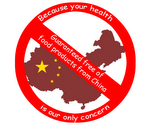
I write this on April 22 - known before 1970 as Lenin's birthday and since then in America as "Earth Day" (when you are reading this, of course, I cannot know). With each passing year, the irony of grafting environmental awareness on the birthday of Communism's founder and examining the ecological records of his largest political heir (the Chinese Communist Party) grows more painful, more cynically amusing, and more impossible to ignore.
This will surprise the casual observer who only sees the CCP press releases on alternative energy sources (yes, Tom Friedman, that means you), but there is arguably no regime that damaged our planet as much as the Chinese Communist Party. The cadres have been forced to account for such exotic chemical spills as cadmium, benzene, and heaven knows what else. They have a slew of mining accidents - annually. Their hydroelectric dam addiction has thoroughly disturbed and distorted water flows, while turning such natural treasurers as the Yangtze and Yellow Rivers into toxic soups. Air pollution is so bad in the interior that the cadres in one city actually explored cutting out the tops of mountains to allow fresh air in. Then there are the open-air nuclear tests from last century, which killed over 200,000 people in occupied East Turkestan (also known as Xinjiang) and sickened many, many more.
In short, the regime in Zhongnanhai has taken its rightful place among Communist defilers of the environment. The Soviet Union was infamous for its toxic-caused animal mutation, and the Chernobyl fiasco was a shocking example of Moscow's lax concern for nuclear safety both before an accident and during one. Yet in the free world, environmentalism remains a largely left-wing phenomenon, complete with the lack of concern for Communist regime's actual records.
What the Western left may be thinking is not the point here, but rather the strange dichotomy between the presumed notion in the free world of government superiority in ecological matters and the reality of totalitarian regimes where the government is itself worse than any corporation - or entire industry - imaginable.
Most economists, environmentalists, and elected officials in the democratic world understand that in making decisions about what to buy, build, or bring together, long-term environmental consequences are not usually a major factor (the term in economic geek-speak is "externality"), and that government can have a role in countering this. However, that assumes government is an arbiter, or at most a facilitator, in the market, without any interests of its own.
Whether this assumption is correct or not is one of the disagreements that have driven politics in the free world for decades, if not centuries. However, there is one important point missed: a totalitarian regime is never an uninterested arbiter; it will always have its own interest - namely survival - front and center. Therefore, the aforementioned long-term environmental consequences are just as irrelevant to the Chinese Communist Party as it would be to your average consumer in the free world. In fact, one could argue that it's less relevant to the CCP, as the regime will assume it has enough power to protect itself from the consequences of the ecological damage it does (the people are, of course, left to suffer).
Thus, tyrannical regimes - interested only in surviving and protecting the group of tyrants (however large or small) - are all but certain to be worse stewards of the planet than democracies are, and the Chinese Communist Party is proving it every single day.
In time, this reality will become harder and harder for the CCP to conceal (the truth about the Soviets started to leak out in the 1980s, but the USSR collapsed before it became common knowledge). Thanks to the regime's faulty policies, China has become the largest carbon emitter on the planet. Its major electric dams are pollution havens. I shudder to think what will happen as they build more nuclear power plants (and I say this as a fan of nuclear power).
As the Zhongnanhai regime limps ahead, it will become abundantly clear to the free world's legion of "green" activists that the CCP is as much their enemy as it is the enemy of everyone else. It may very well be an event celebrated on the birthday of Communism's founder that become the tipping point for the end of Communism's largest regime.
Showing posts with label Ecology. Show all posts
Showing posts with label Ecology. Show all posts
Thursday, April 22, 2010


Thursday, May 21, 2009
The CCP's Illusion of a good week
Over the weekend, President Obama chose Utah Governor Jon Huntsman as his Ambassador to the Chinese Communist regime (Washington Post). Most of the analysis on this side of the Pacific has focused on the domestic politics of the move (Huntsman is a Republican and was considered a strong possibility to be Obama's opponent in 2012). Far less time has been spent examining the international implications - mainly due to the assumption that Hunstman's appointment typifies the pervasive "engagement" mentality among the political establishment (for more on that, see Agence France Presse via Yahoo). Still, one would have to assume that a Democratic President being able to pick off a high-profile Republican to advance "engagement" in Beijing would make it a good week for the CCP. If so, one would be wrong.
For starters, Hunstman's Ambassadorship makes any 2012 campaign almost impossible for him. This actually increases the possibility that the Republicans look to an anti-Communist as their nominee in 2012. How much is hard to say - if a week is a lifetime in American politics, 2012 might as well be an eon or two in the future - but removing a telegenic defender of "engagement" from the presidential field certainly can't be good for the CCP and its cronies.
More importantly, the Huntsman appointment does nothing to alleviate the numerous internal and external problems the CCP faces, some of which are the CCP's own doing, and one of which - by far the most problematic - hits close to home.
First, there is the regime's continued military buildup and geopolitical expansion - both of which are necessary to justify the regime's existence to the Chinese people, but neither of which are exactly neighborly. As the Communist military boasts of its latest achievements (United Press Int'l) and tries to extend the CCP's reach into the hotly disputed South China Sea (Bloomberg), the United States - engagement or not engagement - is beginning to get nervous (Arstechnica). More ominously for the Communists, the US is largely responding to this by developing closer ties with India (Times of India).
Even outside military and territorial matters, foreign affairs is increasingly more foreign. Whatever one may think of the new Administration's efforts to reduce carbon emissions, it has put the CCP in the unusual (and uncomfortable) position of taking it on the rhetorical chin from American environmentalists and their left-of-center allies, such as Paul Krugman in the New York Times.
Then there's the economic front, where the cadres are suffering the worst of both worlds. Outwardly, there is growing alarm at what the Communists could do to the American economy (London Telegraph), making "engagement" all the harder to sell to a beleaguered (and already skeptical) American public. Inwardly, however, all of the signs of a quick recovery - to say nothing of a return to the white-hot days of the last decade - have vanished. Foreign investment is way off (Wall Street Journal). Hong Kong is suffering its worst economic contraction since the "Asian flu" of the 1990s (Financial Times). Meanwhile, the regime's attempt to reverse this is leading to comparisons not with the the CCP's go-go era, but the American housing bubble (Bloomberg).
As for the regime's ominous hints of ending its binge on U.S. Treasury notes, it's not happening (AFP via Google); the powerlessness of credit continues to thwart the CCP. Rather, it is American investors unloading Communist-controlled assets as fast as they can (Wall Street Journal).
Of course, the release of Zhao Ziyang's memoirs (Wall Street Journal) is sure to cause some heartburn in Zhongnanhai; although, like John Pomfret, I don't think the regime will suffer too much. It's not as if they didn't see this coming, and any genuine reformers were purged from the regime long ago. Still, it will remind the Chinese people (those who can get a hold of the book) and the rest of the world that the continuing abuses of human rights by the regime (Asia News and Religious Intelligence is the rule rather than the exceptions.
The biggest threat to the regime's plans, however, has arisen on the island democracy just across the Taiwan Straits.
As the Associated Press reported, at least 100,000 Taiwanese/free Chinese marched in opposition to ROC President Ma Ying-jeou's own "engagement" policies with the Communists (Yahoo). By itself, a protest doesn't mean much (Zhao's memoirs will, ironically, confirm that, too). However, the march is symbolic of increasing nervousness on the island democracy about Ma's olive branch to the CCP. At least one poll had more Taiwanese disapproving of Ma's performance in office than approving (AP via eTaiwanNews) - an outcome driven largely by concern over Ma giving away the store to Beijing.
A new American Ambassador can't make this problems go away (heck, American Presidents have tried to help the CCP win over the Taiwanese people - with disastrous results). Despite the Obama Administration's acceleration of "engagement," the rest of the world continues to get nervous about the Chinese Communist regime - especially those closest to it. That tension will likely continue to grow as the regime - bereft of the economic growth needed to assuage even the tens of millions of party members - bets even more heavily on radical nationalism and growing geopolitical power to survive.
Thus, the American people will be more likely to seek out anti-Communist leaders in 2010 and 2012 - and one the regime's best chances to head that off in the Republican presidential nomination contest was just taken out of the picture. In time, the CCP may rue their supposed good fortune over the Huntsman selection.
For starters, Hunstman's Ambassadorship makes any 2012 campaign almost impossible for him. This actually increases the possibility that the Republicans look to an anti-Communist as their nominee in 2012. How much is hard to say - if a week is a lifetime in American politics, 2012 might as well be an eon or two in the future - but removing a telegenic defender of "engagement" from the presidential field certainly can't be good for the CCP and its cronies.
More importantly, the Huntsman appointment does nothing to alleviate the numerous internal and external problems the CCP faces, some of which are the CCP's own doing, and one of which - by far the most problematic - hits close to home.
First, there is the regime's continued military buildup and geopolitical expansion - both of which are necessary to justify the regime's existence to the Chinese people, but neither of which are exactly neighborly. As the Communist military boasts of its latest achievements (United Press Int'l) and tries to extend the CCP's reach into the hotly disputed South China Sea (Bloomberg), the United States - engagement or not engagement - is beginning to get nervous (Arstechnica). More ominously for the Communists, the US is largely responding to this by developing closer ties with India (Times of India).
Even outside military and territorial matters, foreign affairs is increasingly more foreign. Whatever one may think of the new Administration's efforts to reduce carbon emissions, it has put the CCP in the unusual (and uncomfortable) position of taking it on the rhetorical chin from American environmentalists and their left-of-center allies, such as Paul Krugman in the New York Times.
Then there's the economic front, where the cadres are suffering the worst of both worlds. Outwardly, there is growing alarm at what the Communists could do to the American economy (London Telegraph), making "engagement" all the harder to sell to a beleaguered (and already skeptical) American public. Inwardly, however, all of the signs of a quick recovery - to say nothing of a return to the white-hot days of the last decade - have vanished. Foreign investment is way off (Wall Street Journal). Hong Kong is suffering its worst economic contraction since the "Asian flu" of the 1990s (Financial Times). Meanwhile, the regime's attempt to reverse this is leading to comparisons not with the the CCP's go-go era, but the American housing bubble (Bloomberg).
As for the regime's ominous hints of ending its binge on U.S. Treasury notes, it's not happening (AFP via Google); the powerlessness of credit continues to thwart the CCP. Rather, it is American investors unloading Communist-controlled assets as fast as they can (Wall Street Journal).
Of course, the release of Zhao Ziyang's memoirs (Wall Street Journal) is sure to cause some heartburn in Zhongnanhai; although, like John Pomfret, I don't think the regime will suffer too much. It's not as if they didn't see this coming, and any genuine reformers were purged from the regime long ago. Still, it will remind the Chinese people (those who can get a hold of the book) and the rest of the world that the continuing abuses of human rights by the regime (Asia News and Religious Intelligence is the rule rather than the exceptions.
The biggest threat to the regime's plans, however, has arisen on the island democracy just across the Taiwan Straits.
As the Associated Press reported, at least 100,000 Taiwanese/free Chinese marched in opposition to ROC President Ma Ying-jeou's own "engagement" policies with the Communists (Yahoo). By itself, a protest doesn't mean much (Zhao's memoirs will, ironically, confirm that, too). However, the march is symbolic of increasing nervousness on the island democracy about Ma's olive branch to the CCP. At least one poll had more Taiwanese disapproving of Ma's performance in office than approving (AP via eTaiwanNews) - an outcome driven largely by concern over Ma giving away the store to Beijing.

A new American Ambassador can't make this problems go away (heck, American Presidents have tried to help the CCP win over the Taiwanese people - with disastrous results). Despite the Obama Administration's acceleration of "engagement," the rest of the world continues to get nervous about the Chinese Communist regime - especially those closest to it. That tension will likely continue to grow as the regime - bereft of the economic growth needed to assuage even the tens of millions of party members - bets even more heavily on radical nationalism and growing geopolitical power to survive.
Thus, the American people will be more likely to seek out anti-Communist leaders in 2010 and 2012 - and one the regime's best chances to head that off in the Republican presidential nomination contest was just taken out of the picture. In time, the CCP may rue their supposed good fortune over the Huntsman selection.
Monday, December 01, 2008
Hu Jintao admits to the problem
Communist Chinese boss Hu Jintao admitted over the weekend that things were no longer so peachy economically in his realm (BBC, Epoch Times, and the Washington Post).
It's not as if he had much choice at this point. The warning signs are everywhere now (BBC, Bloomberg, the Epoch Times, Time, Washington Post, and the Weekly Standard Blog).
Still, Hu was, as expected, woefully short on specifics. He called for more reform, which could actually mean more trouble, given that Jiang Zemin turned reform into a euphemism for mass corruption. Meanwhile, Hu made no mention of shutting down the cadres' various international endeavors, such as what Agence France Presse (via Yahoo), the BBC and KTVU noticed.
The Korean colony, of course, continued its more traditional method: clampdowns and ginning up propaganda from useful idiots (BBC, One Free Korea, Washington Post)
Then again, coming clean on the economy - even without any real solution - could actually become a useful diversion from all of the other problems the regime is facing domestically - such as a crumbling ecology (Epoch Times), the continuing spread of AIDS (CBC), and the fallout from Shanghai over Yang Jia's execution (Epoch Times) - or internationally - such as human rights (AFP via NASDAQ, Epoch Times, and the Globe and Mail).
Ironically, the only place where Beijing doesn't seem to be facing serious trouble is Washington (Epoch Times), but if that changes, the cadres may soon face the same critical mass of opposition that the Soviets did in the 1980s.
Thanks to the Chinese Communist Party's combination of incompetence and lack of ethics, the rest of the pieces are falling into place.
It's not as if he had much choice at this point. The warning signs are everywhere now (BBC, Bloomberg, the Epoch Times, Time, Washington Post, and the Weekly Standard Blog).
Still, Hu was, as expected, woefully short on specifics. He called for more reform, which could actually mean more trouble, given that Jiang Zemin turned reform into a euphemism for mass corruption. Meanwhile, Hu made no mention of shutting down the cadres' various international endeavors, such as what Agence France Presse (via Yahoo), the BBC and KTVU noticed.
The Korean colony, of course, continued its more traditional method: clampdowns and ginning up propaganda from useful idiots (BBC, One Free Korea, Washington Post)
Then again, coming clean on the economy - even without any real solution - could actually become a useful diversion from all of the other problems the regime is facing domestically - such as a crumbling ecology (Epoch Times), the continuing spread of AIDS (CBC), and the fallout from Shanghai over Yang Jia's execution (Epoch Times) - or internationally - such as human rights (AFP via NASDAQ, Epoch Times, and the Globe and Mail).
Ironically, the only place where Beijing doesn't seem to be facing serious trouble is Washington (Epoch Times), but if that changes, the cadres may soon face the same critical mass of opposition that the Soviets did in the 1980s.
Thanks to the Chinese Communist Party's combination of incompetence and lack of ethics, the rest of the pieces are falling into place.
Wednesday, November 19, 2008
The powerlessness of credit
Most Americans will remember September 2008 as the month of the Wall Street panic, when Lehman Brothers went under and AIG nearly followed suit. However, we now know that September witnessed one other milestone: the Chinese Communist Party becoming the largest holder of American public debt (Washington Post):
To understand why, let's take a look at what would happen if the CCP decided to follow through on the only real "threat" it could make: namely, unload is U.S. Treasury notes.
In the best case scenario, the debt drop drives down the dollar and drives up interest rates. Other international investors do what the Post authors - and everyone else - fear most, they "follow suit" and run away from T-bills. The dollar falls further, and interest rates rise further. Is a default on the horizon? No, that only happens when nations run out of foreign reserves trying to prop up an artificially high currency level. The only such "peg" the American dollar has is set by the cadres themselves (to their own currency) - a peg that they would have to scratch in order to do this. The rapidly declining dollar would greatly exacerbate America's already shaky economic psychology, and the higher interest rates would likely make the oncoming recession much worse.
However, even within these effects are mitigating factors. The higher interest rates will also make American capital more attractive. Whether it would completely negate the currency effect is hard to predict, but it will at the very least reduce said effect, thus eventually slowing down the exodus of foreign investors. Meanwhile, the lower currency would make American exports - long one of the brightest sectors in our economy - even more attractive to international consumers. No one knows better than the CCP what a white-hot export market can do for one's economy.
In the meantime, the dropping dollar will also have another effect - it will cripple Communist China's export sector at a time when the regime desperately needs it to regain its health. Things are far from perfect in Communist China - all attempts to Brezhnevize the situation notwithstanding. Factory closures for this year are already in the tens of thousands. Previous commitments to improve the disastrous ecology have already fallen victim to economic realities (Washington Post). Angry citizens are in open revolt (BBC and Epoch Times). The Korean colony is showing signs of serious trouble (One Free Korea and World Net Daily). This is hardly the time to send the best export market the CCP has into a deeper recession.
Still, one could see the regime doing so if they thought the geopolitical gains against America were worth the serious risk. Trouble is, any geopolitical gains from a weaker America would be countered by the political damage done to the "engagement" crew. Once the American people see the CCP as the cause of their hard(er) times, anti-Communism will enjoy a very fast political renaissance. Just about every tax-cutting Republican and big-spending Democrat can lay the blame for broken promises, lost jobs, and lower incomes at the feet of Zhongnanhai. How many democratic governments would be so willing to do the Communists' bidding (see the Epoch Times for an example) once that happens?
Meanwhile, any reduction of American strength on the world stage would be counteracted by the continuing rise of India, which is (1) right next door to the Communist regime, (2) already more anti-Communist than the United States at present, and (3) very likely to be more assertive on the world stage if, as expected, the BJP returns to power in next year's elections.
So what the CCP would face is a badly damaged economy - and an angrier citizenry - at home, an economically weakened but far more politically aware enemy across the ocean, and a more assertive enemy next door. Again, this is the best case scenario.
In the worst case scenario, all the political effects are still in place, but the rest of the world doesn't follow the CCP in dumping American bonds. This is more likely than it appears. While the American economy is likely headed for a recession, Japan is already there. Meanwhile, Europe is facing its own financial crisis and currency devaluations. The Middle East is drowning in its own oil. Russia is teetering on complete collapse. For more than a few investors, American T-bills are the best thing out there right now - as even the Post acknowledged:
In other words, nothing good can come from the actual use of economic "power" that comes with the holdings of American debt. Said power is actually a myth.
Still, the myth itself is powerful, and we can expect the cadres to use is as much as they can, for as long as they can, which means right up to the very moment the democratic world comes to understand all that is written above. At that point, the cadres will come face to face with the powerlessness of credit.
Until then, however, the cadres will use American bonds much like Brezhnev et al used nuclear weapons, as an imposing facade to cover up the internal decay. The democratic world should not be fooled.
China passed Japan to become the U.S. government's largest foreign creditor in September, the Treasury Department announced yesterday, reflecting the dramaticSo at long last, the CCP has become America's "largest creditor" - and it couldn't have come at a worse time. Don't be fooled by the dramatic rhetoric about the power Beijing has over the American economy (even the Post fell for that). The regime's only true power is in maintaining the fiction of power; any attempt to realize it will fall painfully flat.
expansion of Beijing's economic influence over the American economy . . . China, in fact, may be the government's largest creditor, period. The Treasury does not keep records on domestic bond holders. But analysts said China's holdings are so vast that the existence of a larger stakeholder in the United States now seems unlikely.
To understand why, let's take a look at what would happen if the CCP decided to follow through on the only real "threat" it could make: namely, unload is U.S. Treasury notes.
In the best case scenario, the debt drop drives down the dollar and drives up interest rates. Other international investors do what the Post authors - and everyone else - fear most, they "follow suit" and run away from T-bills. The dollar falls further, and interest rates rise further. Is a default on the horizon? No, that only happens when nations run out of foreign reserves trying to prop up an artificially high currency level. The only such "peg" the American dollar has is set by the cadres themselves (to their own currency) - a peg that they would have to scratch in order to do this. The rapidly declining dollar would greatly exacerbate America's already shaky economic psychology, and the higher interest rates would likely make the oncoming recession much worse.
However, even within these effects are mitigating factors. The higher interest rates will also make American capital more attractive. Whether it would completely negate the currency effect is hard to predict, but it will at the very least reduce said effect, thus eventually slowing down the exodus of foreign investors. Meanwhile, the lower currency would make American exports - long one of the brightest sectors in our economy - even more attractive to international consumers. No one knows better than the CCP what a white-hot export market can do for one's economy.
In the meantime, the dropping dollar will also have another effect - it will cripple Communist China's export sector at a time when the regime desperately needs it to regain its health. Things are far from perfect in Communist China - all attempts to Brezhnevize the situation notwithstanding. Factory closures for this year are already in the tens of thousands. Previous commitments to improve the disastrous ecology have already fallen victim to economic realities (Washington Post). Angry citizens are in open revolt (BBC and Epoch Times). The Korean colony is showing signs of serious trouble (One Free Korea and World Net Daily). This is hardly the time to send the best export market the CCP has into a deeper recession.
Still, one could see the regime doing so if they thought the geopolitical gains against America were worth the serious risk. Trouble is, any geopolitical gains from a weaker America would be countered by the political damage done to the "engagement" crew. Once the American people see the CCP as the cause of their hard(er) times, anti-Communism will enjoy a very fast political renaissance. Just about every tax-cutting Republican and big-spending Democrat can lay the blame for broken promises, lost jobs, and lower incomes at the feet of Zhongnanhai. How many democratic governments would be so willing to do the Communists' bidding (see the Epoch Times for an example) once that happens?
Meanwhile, any reduction of American strength on the world stage would be counteracted by the continuing rise of India, which is (1) right next door to the Communist regime, (2) already more anti-Communist than the United States at present, and (3) very likely to be more assertive on the world stage if, as expected, the BJP returns to power in next year's elections.
So what the CCP would face is a badly damaged economy - and an angrier citizenry - at home, an economically weakened but far more politically aware enemy across the ocean, and a more assertive enemy next door. Again, this is the best case scenario.
In the worst case scenario, all the political effects are still in place, but the rest of the world doesn't follow the CCP in dumping American bonds. This is more likely than it appears. While the American economy is likely headed for a recession, Japan is already there. Meanwhile, Europe is facing its own financial crisis and currency devaluations. The Middle East is drowning in its own oil. Russia is teetering on complete collapse. For more than a few investors, American T-bills are the best thing out there right now - as even the Post acknowledged:
What happens if the Communists unload their American debt but the rest of the world snaps it up? Then all the leverage and goodwill is gone and the American economy is undamaged (at least by this). Meanwhile, the dollar will still fall relative to the Communist renminbi, meaning the export-market damage would still occur - and even without it, the domestic economy the cadres face is already in bad shape.The surge in Chinese buying is part of a rush by panicked investors into U.S. Treasurys, an indication that lending to the U.S. government is still seen as among the safest investments in uncertain times.
"It is occurring in an environment where global investment prospects are less enticing," said Lawrence Goodman, head of emerging market strategy at Bank of America. "There is a movement for foreigners to seek safer haven investments like Treasurys versus more risk-oriented foreign investments."
In other words, nothing good can come from the actual use of economic "power" that comes with the holdings of American debt. Said power is actually a myth.
Still, the myth itself is powerful, and we can expect the cadres to use is as much as they can, for as long as they can, which means right up to the very moment the democratic world comes to understand all that is written above. At that point, the cadres will come face to face with the powerlessness of credit.
Until then, however, the cadres will use American bonds much like Brezhnev et al used nuclear weapons, as an imposing facade to cover up the internal decay. The democratic world should not be fooled.
Wednesday, November 12, 2008
More trouble for the CCP
The news and events continue to pour in - or to be more precise, pour down upon the Chinese Communist Party. The regime is clearly in a "rough patch," as it were.
The extent of the economic slowdown is becoming unavoidable; the coal and coke industry appear to be in a full-fledged recession (Epoch Times) - a word that strikes terror in the heart of a regime that needs economic growth of at least 7% just to keep up with the population. It might also explain the impetus behind the massive "economic stimulus" (Epoch Times) the cadres announced over the weekend, although the success of that plan is debatable, at best. More likely, it will simply mean more incentives for the cadres to steal land and build useless factories while the economy sinks beneath the waves (Epoch Times) and the ecology worsens (EnGadget).
Meanwhile, Tibet continues to be a headache (Epoch Times), and worse, India's center-left government appears to have finally gotten wise about the danger from Beijing (Epoch Times).
The cadres will do their best to ignore all of this, and choose instead to continue expanding their influence abroad (Epoch Times), crush dissent at home (Boycott 2008 and Epoch Times), use the Korean colony to maximum effect (BBC and Newsmax), and enjoy some Taiwanese schadenfreude (BBC, CNN, and the Washington Times). Those who remember the First Cold War will remember this phase of Communism well: the Brezhnev phase.
Leonid Brezhnev's solution for the problems faced by the Soviet Union - ignore them and increase the aggressive behavior abroad - worked so well that the USSR couldn't outlast him by as much as a decade, even though no American President seriously challenged his regime until just before he died. That should bring hope to all anti-Communists. Even if Obama becomes the "second Carter" his critics fear he will be, Hu Jintao seems determined to be the second Brezhnev.
Bismark is reported to have said, "God has a special providence for fools, drunks, and the United States of America." He continues to be more right than he could have possibly imagined.
The extent of the economic slowdown is becoming unavoidable; the coal and coke industry appear to be in a full-fledged recession (Epoch Times) - a word that strikes terror in the heart of a regime that needs economic growth of at least 7% just to keep up with the population. It might also explain the impetus behind the massive "economic stimulus" (Epoch Times) the cadres announced over the weekend, although the success of that plan is debatable, at best. More likely, it will simply mean more incentives for the cadres to steal land and build useless factories while the economy sinks beneath the waves (Epoch Times) and the ecology worsens (EnGadget).
Meanwhile, Tibet continues to be a headache (Epoch Times), and worse, India's center-left government appears to have finally gotten wise about the danger from Beijing (Epoch Times).
The cadres will do their best to ignore all of this, and choose instead to continue expanding their influence abroad (Epoch Times), crush dissent at home (Boycott 2008 and Epoch Times), use the Korean colony to maximum effect (BBC and Newsmax), and enjoy some Taiwanese schadenfreude (BBC, CNN, and the Washington Times). Those who remember the First Cold War will remember this phase of Communism well: the Brezhnev phase.
Leonid Brezhnev's solution for the problems faced by the Soviet Union - ignore them and increase the aggressive behavior abroad - worked so well that the USSR couldn't outlast him by as much as a decade, even though no American President seriously challenged his regime until just before he died. That should bring hope to all anti-Communists. Even if Obama becomes the "second Carter" his critics fear he will be, Hu Jintao seems determined to be the second Brezhnev.
Bismark is reported to have said, "God has a special providence for fools, drunks, and the United States of America." He continues to be more right than he could have possibly imagined.
Monday, November 10, 2008
Trouble on the horizon for the CCP
Over the weekend, we discovered once and for all what a disaster the 2008 Beijing Olympics really were for the Communist regime. The reason, however, was not an expected one. The Washington Post, in their analysis of the melamine poison scandal, unearthed the surprising fact that essentially wiped out all the benefits of the summer propaganda exercise (emphasis added):
So it turns out that fear of "besmirching the Beijing Olympic Games" led in part to the greatest international embarrassment for the Chinese Communist Party in nineteen years.
Oops.
Under normal circumstances, this would be bad enough, but the regime is going through anything but normal times.
For starters, we have the oncoming recession, the first serious one since the regime become the export maven for which it was famous just months ago (and is now infamous, see above). The cadres are responding the only way they know how, with more infrastructure projects that will do little or nothing for the overall economy (Washington Post). When this fails, as I suspect it will, the regime will be up a serious creek - one that will be far more beneficial for the rest of the world than even it realizes, as One Free Korea notes. When even the Potemkin city of Shenzhen is hosting anti-police riots (BBC), there is serious trouble afoot.
The melamine and economic crises also come just as the rest of the world has decided to stop giving the Communists so much slack over festering problems that refuse to simply go away. The regime's insistence that the "developed world" cover the cost of greenhouse-gas reduction rings quite hollow now that Communist China is the leading carbon emitter (Washington Times).
True, Taiwan is becoming much more cooperative under President Ma Ying-jeou (Washington Times), but the cadres barely had time to enjoy that before the Dalai Lama made it clear he would listen more to his people and take a tougher line on occupied Tibet (BBC and CNN).
Even the Korean colony, fresh off its spectacular slaying of the Bush Administration, is causing more trouble with its abductions of Japanese citizens returning to the news (BBC).
As January approaches, it becomes clear the Chinese Communist regime will need willing dupes in Washington and elsewhere in the free world as never before. Here's hoping the President-elect refuses to be one of them.
Initially covered up by officials afraid of losing their jobs and besmirching the Beijing Olympic Games, the melamine contamination scandal began with infant milk formula that killed at least four infants and sickened 54,000 babies. It soon spread to candy, instant coffee, yogurt, biscuits and other products made with Chinese milk, prompting bans or recalls in 16 countries.
In recent weeks the toxin has been discovered in eggs and in animal feed, sparking fears that tainted foods go well beyond dairy products and may include fish, shrimp, beef and poultry.
So it turns out that fear of "besmirching the Beijing Olympic Games" led in part to the greatest international embarrassment for the Chinese Communist Party in nineteen years.
Oops.
Under normal circumstances, this would be bad enough, but the regime is going through anything but normal times.
For starters, we have the oncoming recession, the first serious one since the regime become the export maven for which it was famous just months ago (and is now infamous, see above). The cadres are responding the only way they know how, with more infrastructure projects that will do little or nothing for the overall economy (Washington Post). When this fails, as I suspect it will, the regime will be up a serious creek - one that will be far more beneficial for the rest of the world than even it realizes, as One Free Korea notes. When even the Potemkin city of Shenzhen is hosting anti-police riots (BBC), there is serious trouble afoot.
The melamine and economic crises also come just as the rest of the world has decided to stop giving the Communists so much slack over festering problems that refuse to simply go away. The regime's insistence that the "developed world" cover the cost of greenhouse-gas reduction rings quite hollow now that Communist China is the leading carbon emitter (Washington Times).
True, Taiwan is becoming much more cooperative under President Ma Ying-jeou (Washington Times), but the cadres barely had time to enjoy that before the Dalai Lama made it clear he would listen more to his people and take a tougher line on occupied Tibet (BBC and CNN).
Even the Korean colony, fresh off its spectacular slaying of the Bush Administration, is causing more trouble with its abductions of Japanese citizens returning to the news (BBC).
As January approaches, it becomes clear the Chinese Communist regime will need willing dupes in Washington and elsewhere in the free world as never before. Here's hoping the President-elect refuses to be one of them.
Thursday, October 30, 2008
The view from abroad
So long as the Chinese Communist regime refuses to submit itself to the will of the people (in other words, for as long as it continues to exist), it will need to rely on the approval of foreign leaders to enhance its own reputation and pretend it is making China "respectable" (in fact, the only thing not respectable about China is the CCP, but that's for another day).
From that perspective, today was a bad day for the Communists.
Canadian Prime Minister Stephen Harper announced his new cabinet, and it was much improved from his last one. The move that most especially please me was Stockwell Day going to the Ministry of International Trade (Steven Taylor). To have a dedicated anti-Communist in this position is a genuine coup; that the Asia-Pacific Gateway was added to his portfolio is an unexpected bonus.
Meanwhile, the Dalai Lama, Tibet's spiritual leader, greeted the news that the CCP wants more talks with him by hinting he might allow full independence for his occupied homeland to be part of his agenda (BBC). Clearly the Korea colony's wildly successful use of threats to get what it wants (One Free Korea) rubbed off in a way Beijing did not expect.
Not that they've learned anything from it, given their saber-rattling on global warming (BBC).
Meanwhile, the American election hasn't focused on Communist China much (Washington Times), but more attention is being paid to the cadres' ambitions in the Caribbean (Times again).
Finally there is - or is supposed to be - the world financial crisis, and the Communists' chance to stride the world stage and help alleviate it. That may not be in the cards, though, given their own economic straits (Epoch Times) and the continuing melamine fall-out (BBC).
Clearly, anti-Communism was on the march today. Whether it stays there will likely be up to the Tibetan monk and the Trade Minister.
From that perspective, today was a bad day for the Communists.
Canadian Prime Minister Stephen Harper announced his new cabinet, and it was much improved from his last one. The move that most especially please me was Stockwell Day going to the Ministry of International Trade (Steven Taylor). To have a dedicated anti-Communist in this position is a genuine coup; that the Asia-Pacific Gateway was added to his portfolio is an unexpected bonus.
Meanwhile, the Dalai Lama, Tibet's spiritual leader, greeted the news that the CCP wants more talks with him by hinting he might allow full independence for his occupied homeland to be part of his agenda (BBC). Clearly the Korea colony's wildly successful use of threats to get what it wants (One Free Korea) rubbed off in a way Beijing did not expect.
Not that they've learned anything from it, given their saber-rattling on global warming (BBC).
Meanwhile, the American election hasn't focused on Communist China much (Washington Times), but more attention is being paid to the cadres' ambitions in the Caribbean (Times again).
Finally there is - or is supposed to be - the world financial crisis, and the Communists' chance to stride the world stage and help alleviate it. That may not be in the cards, though, given their own economic straits (Epoch Times) and the continuing melamine fall-out (BBC).
Clearly, anti-Communism was on the march today. Whether it stays there will likely be up to the Tibetan monk and the Trade Minister.
Friday, September 05, 2008
Is Stalinist North Korea's present to be Communist China's future
Yesterday, I wrote on the similarities between Communist China and its Korean colony. As it turns out, that analogy may be stronger than even I knew.
Ji Da of the New Epoch Weekly presented a detailed, focused, and frightening account of how the Communist regime has knocked the domestic food market badly out of whack. I'd recommend reading the whole thing (Epoch Times), but the final two paragraphs are critical:
In other words, the famines wracking northern Korea could cross the Yalu River very soon. Given how the Stalinists have reacted (BBC and One Free Korea), this is a cause for grave concern. To see why, just combine Kim Jong-il's brutal starvation of his own people and nuclear brinkmanship with the large, modernizing "People's Liberation Army," Beijing's long and deep ties to terrorism, and the regime's desperate reliance and radical nationalism to survive.
This is a danger barreling in from the horizon. The democratic world must take heed. America and her allies will never be secure until China is free.
Ji Da of the New Epoch Weekly presented a detailed, focused, and frightening account of how the Communist regime has knocked the domestic food market badly out of whack. I'd recommend reading the whole thing (Epoch Times), but the final two paragraphs are critical:
In the mid-1990s, residents of four major Chinese cities (Beijing, Shanghai,
Guangzhou, and Shenzhen) consumed an average of 600 kilogram of grain each year.
Even if the nationwide standard of living increases to that of these four cities in the 1990s, China’s grain consumption will increase by more than half. In other words, China needs 750 billion tons of grain to meet domestic demand.However, to the Chinese government, purchasing food from the international market does not provide real security. A significant portion of the imports may need to come from the United States, Canada, and Australia. On the other hand, it is not realistic for China to meet its own domestic demand in the longer term. Two-thirds of China’s land mass consists of mountain, desert, and arid regions. Very little new land can be developed for agriculture use. Urban expansion, pollution, and limited water resources also constrain the growth of food production. In fact, Chinese food production has been flat for the last decade. This will be an issue of increasing global concern.
In other words, the famines wracking northern Korea could cross the Yalu River very soon. Given how the Stalinists have reacted (BBC and One Free Korea), this is a cause for grave concern. To see why, just combine Kim Jong-il's brutal starvation of his own people and nuclear brinkmanship with the large, modernizing "People's Liberation Army," Beijing's long and deep ties to terrorism, and the regime's desperate reliance and radical nationalism to survive.
This is a danger barreling in from the horizon. The democratic world must take heed. America and her allies will never be secure until China is free.
Tuesday, September 02, 2008
CCP's neighbors are moving away from it
One would suspect that if the Communist Olympiad were as successful as the cadres claim it was, it would have an impact in foreign affairs, i.e., pro-"engagement" politicians would be basking in the glow while more hard-line leaders would be lowering their profile.
That's not what we see in the neighborhood, though.
In Japan, Beijing's best friend in the region stepped down as Prime Minister - due to widespread unpopularity (CNN and Washington Post). It's possible that the now-ex-PM's policies did not match well with the news of poisoned dumplings exported from Communist China to Japan (Epoch Times). In any event, the most likely successor is long-time anti-Communist Taro Aso (BBC and One Free Korea), which would mean a sea change in Japan's relations with the CCP. His counterpart in Taiwan (President Ma Ying-jeou) had several thousand anti-Communists show up on his front door this weekend demanding he stop tacking toward Beijing (BBC). Even local-level "engagement" backers like the Mayor of Vancouver are taking it on the rhetorical chin (Boycott 2008).
Meanwhile, in South Korea, President Lee Myung-bak is taking in more refugees from the Communists' Korean colony (One Free Korea), despite more bluster from said colony (OFK).
What happened? Why are the anti-Communists ascendant after the Communists' great propaganda bonanza?
Well, perhaps it wasn't really a bonanza after all (and I'm happy to see Grit Hartman agree with me - Epoch Times), and the post-mortems (literally in some cases - Boycott 2008) are only making matters worse. Besides the pre-Olympic murder in the aforementioned link, we have an entire family imprisoned because one man protested during the Games (Washington Post) and lingering anger in Taiwan about the "Chinese Taipei" label (Epoch Times - this may in part explain the anti-Ma protest). The 2008 Games are so tarnished that London City Councillor felt safe criticizing the athletes who participated (Boycott 2008).
Thus, without the Olympic "bounce," the cadres were stuck with reports of corruption in the billions of dollars (Epoch Times), environmental protests (Epoch Times), international support for Gao Zhisheng (Epoch Times and Boycott 2008), criticism of the brutal occupation of East Turkestan (Epoch Times), nationalist anger at the border treaty with Russia (Epoch Times), and nervousness from the rest of the world about the regime's geopolitical objectives (The Australian and Boycott 2008).
As if that weren't bad enough, the lawsuit against regime-owned Bank of China for facilitating Hamas financing continued to get more press (NTDTV and Pajamas Media).
Given all of this, it shouldn't surprise anyone that those who would coddle up to the regime are resigning or facing criticism. The only surprise may be that the post-Olympic hangover is coming much quicker than expected, if only because few of us new the Olympics themselves would be such a bust.
That's not what we see in the neighborhood, though.
In Japan, Beijing's best friend in the region stepped down as Prime Minister - due to widespread unpopularity (CNN and Washington Post). It's possible that the now-ex-PM's policies did not match well with the news of poisoned dumplings exported from Communist China to Japan (Epoch Times). In any event, the most likely successor is long-time anti-Communist Taro Aso (BBC and One Free Korea), which would mean a sea change in Japan's relations with the CCP. His counterpart in Taiwan (President Ma Ying-jeou) had several thousand anti-Communists show up on his front door this weekend demanding he stop tacking toward Beijing (BBC). Even local-level "engagement" backers like the Mayor of Vancouver are taking it on the rhetorical chin (Boycott 2008).
Meanwhile, in South Korea, President Lee Myung-bak is taking in more refugees from the Communists' Korean colony (One Free Korea), despite more bluster from said colony (OFK).
What happened? Why are the anti-Communists ascendant after the Communists' great propaganda bonanza?
Well, perhaps it wasn't really a bonanza after all (and I'm happy to see Grit Hartman agree with me - Epoch Times), and the post-mortems (literally in some cases - Boycott 2008) are only making matters worse. Besides the pre-Olympic murder in the aforementioned link, we have an entire family imprisoned because one man protested during the Games (Washington Post) and lingering anger in Taiwan about the "Chinese Taipei" label (Epoch Times - this may in part explain the anti-Ma protest). The 2008 Games are so tarnished that London City Councillor felt safe criticizing the athletes who participated (Boycott 2008).
Thus, without the Olympic "bounce," the cadres were stuck with reports of corruption in the billions of dollars (Epoch Times), environmental protests (Epoch Times), international support for Gao Zhisheng (Epoch Times and Boycott 2008), criticism of the brutal occupation of East Turkestan (Epoch Times), nationalist anger at the border treaty with Russia (Epoch Times), and nervousness from the rest of the world about the regime's geopolitical objectives (The Australian and Boycott 2008).
As if that weren't bad enough, the lawsuit against regime-owned Bank of China for facilitating Hamas financing continued to get more press (NTDTV and Pajamas Media).
Given all of this, it shouldn't surprise anyone that those who would coddle up to the regime are resigning or facing criticism. The only surprise may be that the post-Olympic hangover is coming much quicker than expected, if only because few of us new the Olympics themselves would be such a bust.
Friday, August 08, 2008
Open Letter to Maurice Strong
Dear Mr. Strong,
I have read you column in Macleans yesterday evening, and I must confess that I found it remarkable - in its deep denial of the truth, servility to the Communist regime that hosts and protects you, and utter lack of recognition of how the free world thinks and acts. With any luck, you may read this and come to see your egregious errors. Even in the more likely possibilities that you remain unmoved by this (or unaware of it), others who have read your column may see this as well so that they may not fall prey to your long-winded illusions.
The first of which is your notion that the restrictions placed upon the Chinese people are "minimal." People of faith through the land you call home suffer far more than "minimal" restrictions on their right to practice their religion (Boycott 2008 and Epoch Times). Nor would attorney Gao Zhisheng, who has been imprisoned and tortured simply because he asked for such "minimal" restrictions to cease (Epoch Times). I would also refer you to the relatives of the Tiananmen massacre victims (See also Pajamas Media).
This is a truth that is recognized throughout the world, and neither your attempts to minimize it nor your subsequent descent into moral relativism can explain it away. Even among the center-left in the free world, where your criticisms of democratic nations are most well-received, the step you take towards dismissing the abuses of the Chinese Communist Party is simply not taken (Boycott 2008 and Epoch Times). Even the most virulent opponents of American foreign policy, such as The Progressive, make clear that, in their words: "This is not to say that Bush’s human rights abuses are equal to China’s." Thus the notion you imply and hope to sell to the free world is in fact rejected across the political spectrum here (to see the political right's response, if you wish, I refer to the Washington Examiner).
Having failed to understand our politics, you move on to miss economics. To claim that Communist China is "utilizing the methods of capitalism" without a functioning rule of law or genuine property rights is to completely misunderstand the term. "Capitalism" - or, to be more precise, a free market economy - does not exist without genuine property rights, and as any rural village citizen could tell you (if they felt safe enough to do so), genuine property rights do not exist in Communist China. Neither does the rule of law, although if you perhaps attempted to earn a profit in Beijing rather than hold down a United Nations sinecure you would probably be more aware of that.
Your discussion of "climate change" is also flawed. The idea that "those who have contributed most to the problem of climate change must take the lead" sounds wonderful, but does nothing to address the fact that exempting Communist China from any post-Kyoto agreement (or limiting its impact on it) will do nothing to impact carbon emission now that Communist China is the largest carbon emitter on Earth. To further use the issue to rant against "the wasteful and indulgent appetites of the rich and their pre-emption of a disproportion of the world's resources" is particularly brazen given that your friends in the CCP elite exercise these indulgences and pre-emptions with far more gall and self-absorption than anyone in the free world (outside of its criminal element) would even dare.
Moving on to your historical errors, I am curious as to how the people of East Turkestan and Tibet would react to your assertion that "China's territorial disputes with its neighbours have been confined to differences over their boundaries rather than attempts to occupy or annex them." Not that any Tibetans or East Turkestanis are allowed to speak freely on this matter, thus you can resort to the typical Communist propaganda on Tibet that is justified by nothing but Nazi lies. Then again, that isn't the only time the Communists have looked to the Nazis for inspiration (Small Dead Animals).
Not that your account of recent history is much better. Your assertion of Communist China's acceptance of the "differences that exist" between Hong Kong and the mainland can only come from someone unwilling to pay attention to the events of the last decade there.
I could not help but note several other issues you do not mention: the Communist aid and comfort to the brutal Sudanese regime (Epoch Times and Washington Post), and Beijing's Korean colony (One Free Korea). I was particularly intrigued by your decision to ignore the latter, as you have been the United Nations' special envoy on the subject for many years. Your silence is deafening.
The rest of your column is standard propaganda from expatriates, but I am compelled to point out this particular nonsense for what it is:
I can do more than ask myself these questions, I can actually answer them. The Chinese people may claim to be "better off and better satisfied than ever," but one wouldn't have to go far beyond Beijing to see that this is little more than Communist propaganda (in fact, just spending some time with the legions of appellants/petitioners risking arrests and torture should do the trick, but if you prefer, try Hanyuan, Taishi, or Shanwei).
As for "more overseas Chinese are returning to China," there are likely several reasons, but one of them has to be the extension of the Communist Long Arm of Lawlessness into the free world to intimidate exiles into silence. A brave few refuse to succumb to the mobs (Epoch Times), but such bravery is not common in the human condition. I'm sure many Chinese who would prefer freedom abroad to repression at home are deciding that repression abroad is no better.
Your assertion about foreigners is best answered by Ethan Gutmann's Losing the New China, in which he describes the painful manner in which expatriates are compromised ethically and financially by the regime.
I will acknowledge that your particular reasons for remaining in Beijing, which may have more to do with avoiding a certain inquiry into Iraq's Oil-for-Food program than anything else, have probably blinded you to this reality.
In short, your column managed to get international politics, economics, and history wrong in several areas. As such, I can certainly understand why you could not fathom the anger in the free world over Communist China's behavior (Asian-Pacific Post, Between Heaven and Earth, Boycott 2008, Epoch Times, From On High, National Review Online, Washington Post). Not even those willing to enjoy the Olympic Games can suspend disbelief as you have on the Communist regime (Washington Post).
As I mentioned in the opening paragraph, I do hope that you see this and that it may open your mind. If so, you might want to consider the radio broadcasts from Reporters Without Borders (Boycott 2008 and the Epoch Times). Otherwise, I can at least hope that those who read your error-prone column will also read this and avoid the errors you have made.
Yours truly,
D.J. McGuire
China e-Lobby
I have read you column in Macleans yesterday evening, and I must confess that I found it remarkable - in its deep denial of the truth, servility to the Communist regime that hosts and protects you, and utter lack of recognition of how the free world thinks and acts. With any luck, you may read this and come to see your egregious errors. Even in the more likely possibilities that you remain unmoved by this (or unaware of it), others who have read your column may see this as well so that they may not fall prey to your long-winded illusions.
The first of which is your notion that the restrictions placed upon the Chinese people are "minimal." People of faith through the land you call home suffer far more than "minimal" restrictions on their right to practice their religion (Boycott 2008 and Epoch Times). Nor would attorney Gao Zhisheng, who has been imprisoned and tortured simply because he asked for such "minimal" restrictions to cease (Epoch Times). I would also refer you to the relatives of the Tiananmen massacre victims (See also Pajamas Media).
This is a truth that is recognized throughout the world, and neither your attempts to minimize it nor your subsequent descent into moral relativism can explain it away. Even among the center-left in the free world, where your criticisms of democratic nations are most well-received, the step you take towards dismissing the abuses of the Chinese Communist Party is simply not taken (Boycott 2008 and Epoch Times). Even the most virulent opponents of American foreign policy, such as The Progressive, make clear that, in their words: "This is not to say that Bush’s human rights abuses are equal to China’s." Thus the notion you imply and hope to sell to the free world is in fact rejected across the political spectrum here (to see the political right's response, if you wish, I refer to the Washington Examiner).
Having failed to understand our politics, you move on to miss economics. To claim that Communist China is "utilizing the methods of capitalism" without a functioning rule of law or genuine property rights is to completely misunderstand the term. "Capitalism" - or, to be more precise, a free market economy - does not exist without genuine property rights, and as any rural village citizen could tell you (if they felt safe enough to do so), genuine property rights do not exist in Communist China. Neither does the rule of law, although if you perhaps attempted to earn a profit in Beijing rather than hold down a United Nations sinecure you would probably be more aware of that.
Your discussion of "climate change" is also flawed. The idea that "those who have contributed most to the problem of climate change must take the lead" sounds wonderful, but does nothing to address the fact that exempting Communist China from any post-Kyoto agreement (or limiting its impact on it) will do nothing to impact carbon emission now that Communist China is the largest carbon emitter on Earth. To further use the issue to rant against "the wasteful and indulgent appetites of the rich and their pre-emption of a disproportion of the world's resources" is particularly brazen given that your friends in the CCP elite exercise these indulgences and pre-emptions with far more gall and self-absorption than anyone in the free world (outside of its criminal element) would even dare.
Moving on to your historical errors, I am curious as to how the people of East Turkestan and Tibet would react to your assertion that "China's territorial disputes with its neighbours have been confined to differences over their boundaries rather than attempts to occupy or annex them." Not that any Tibetans or East Turkestanis are allowed to speak freely on this matter, thus you can resort to the typical Communist propaganda on Tibet that is justified by nothing but Nazi lies. Then again, that isn't the only time the Communists have looked to the Nazis for inspiration (Small Dead Animals).
Not that your account of recent history is much better. Your assertion of Communist China's acceptance of the "differences that exist" between Hong Kong and the mainland can only come from someone unwilling to pay attention to the events of the last decade there.
I could not help but note several other issues you do not mention: the Communist aid and comfort to the brutal Sudanese regime (Epoch Times and Washington Post), and Beijing's Korean colony (One Free Korea). I was particularly intrigued by your decision to ignore the latter, as you have been the United Nations' special envoy on the subject for many years. Your silence is deafening.
The rest of your column is standard propaganda from expatriates, but I am compelled to point out this particular nonsense for what it is:
Uninformed and ideologically biased critics of China should ask themselves why it is that the majority of Chinese today are better off and better satisfied than ever, why more overseas Chinese are returning to China, and why more foreigners are enjoying conditions of life here that make them want to stay, even if it involves changing their employment to do so.
I can do more than ask myself these questions, I can actually answer them. The Chinese people may claim to be "better off and better satisfied than ever," but one wouldn't have to go far beyond Beijing to see that this is little more than Communist propaganda (in fact, just spending some time with the legions of appellants/petitioners risking arrests and torture should do the trick, but if you prefer, try Hanyuan, Taishi, or Shanwei).
As for "more overseas Chinese are returning to China," there are likely several reasons, but one of them has to be the extension of the Communist Long Arm of Lawlessness into the free world to intimidate exiles into silence. A brave few refuse to succumb to the mobs (Epoch Times), but such bravery is not common in the human condition. I'm sure many Chinese who would prefer freedom abroad to repression at home are deciding that repression abroad is no better.
Your assertion about foreigners is best answered by Ethan Gutmann's Losing the New China, in which he describes the painful manner in which expatriates are compromised ethically and financially by the regime.
I will acknowledge that your particular reasons for remaining in Beijing, which may have more to do with avoiding a certain inquiry into Iraq's Oil-for-Food program than anything else, have probably blinded you to this reality.
In short, your column managed to get international politics, economics, and history wrong in several areas. As such, I can certainly understand why you could not fathom the anger in the free world over Communist China's behavior (Asian-Pacific Post, Between Heaven and Earth, Boycott 2008, Epoch Times, From On High, National Review Online, Washington Post). Not even those willing to enjoy the Olympic Games can suspend disbelief as you have on the Communist regime (Washington Post).
As I mentioned in the opening paragraph, I do hope that you see this and that it may open your mind. If so, you might want to consider the radio broadcasts from Reporters Without Borders (Boycott 2008 and the Epoch Times). Otherwise, I can at least hope that those who read your error-prone column will also read this and avoid the errors you have made.
Yours truly,
D.J. McGuire
China e-Lobby
Thursday, July 31, 2008
Olympic run-up? More like a run-down.
The Communist regime spent years looking forward to these weeks before the Olympics, what with the reports highlights the China it wants the world to see in the build-up to the propaganda bonanza - at least, that was their fervent hope. As it turns out, though, August 8 can't come fast enough.
The pre-Olympic problems are getting so bad they're even staining people and institutions outside the CCP. The cadres' determination to block the "wrong" internet sites - even from foreign journalists - has thoroughly discredited the weak-kneed International Olympic Committee (Boycott 2008, CTV, NRO - The Corner, and the Washington Post). Meanwhile, President Bush is trying to make the Communists and the anti-Communists happy (Epoch Times and the Washington Post). Then there are the usual problems: pollution (CNN and the Washington Post) and human rights (BBC, Boycott 2008, and CNN).
On the plus side for the Communists (and the minus side for the rest of us), the Olympic brouhaha has shoved the turn-off of NTDTV (Epoch Times), Beijing's increasing role in Africa (BBC), and the starving of northern Korea (London Telegraph and the Washington Post) off the front page, just like it was supposed to do.
When the Games actually start, they will likely move all of the bad news off the front page; but the post-Olympic hangover is something else again.
The pre-Olympic problems are getting so bad they're even staining people and institutions outside the CCP. The cadres' determination to block the "wrong" internet sites - even from foreign journalists - has thoroughly discredited the weak-kneed International Olympic Committee (Boycott 2008, CTV, NRO - The Corner, and the Washington Post). Meanwhile, President Bush is trying to make the Communists and the anti-Communists happy (Epoch Times and the Washington Post). Then there are the usual problems: pollution (CNN and the Washington Post) and human rights (BBC, Boycott 2008, and CNN).
On the plus side for the Communists (and the minus side for the rest of us), the Olympic brouhaha has shoved the turn-off of NTDTV (Epoch Times), Beijing's increasing role in Africa (BBC), and the starving of northern Korea (London Telegraph and the Washington Post) off the front page, just like it was supposed to do.
When the Games actually start, they will likely move all of the bad news off the front page; but the post-Olympic hangover is something else again.
Wednesday, July 30, 2008
We have our Olympic symbol: the mask
We all knew the Communists would try to mask the reality of China - such as state-sponsored murder (Between Heaven and Earth) and labor camps full of picture takers (BBC) - to hide it from outsiders. We knew the mask the cadres use to deceive the Chinese people would be so invasive (Epoch Times) that those very outsiders would be affected (AFP via Breitbart, BBC, BBC again, and Boycott 2008). They've even reached beyond their borders to silence exiles who could disturb the masks (The Epoch Times).
Now, however, the mask is sure to become the unintended Olympic icon - the athletes are bringing them:
Australian track-and-field athletes will "hold its pre-Olympic training camp in Hong Kong, and athletes will then fly to Beijing a few days before their events, the minimum exposure possible."
Naturally, the Communists will move heaven and earth to ensure none of these masks get inside Beijing's Olympic palaces. These are the same people who have taken it upon themselves to ban blacks from night clubs (Washington Post). Still, the symbolism is unavoidable.
Meanwhile, the cadres are dealing with accusations of cyberspying (CQ Politics, Newsmax, and Washington Times), run-of-the-mill spying (CQ Politics), cheating (Toronto Star), and luring dissidents into the open - and later prison (Epoch Times). Then there are the usual flare-ups over human rights (Boycott 2008 and Washington Post) and Darfur (World Net Daily).
None of that won't stop the propaganda machine already in full swing (Weekly Standard), neither will Beijing's increasing grip on Costa Rica (Epoch Times) or its colony's return to famine (BBC and Washington Post). Odds are the Communists' masks will have more staying power than anyone else's. What happens when the masks fall is another matter entirely.
Now, however, the mask is sure to become the unintended Olympic icon - the athletes are bringing them:
"Concerned about the pollution, the U.S. Olympic Committee is distributing a high-tech mask, developed in secrecy, to its more than 600 Olympians." - Wall Street Journal
"Japan's Olympic delegation will carry 500 dust masks for industrial use to guard against the notorious air pollution in Beijing, a corporate official said Monday." - Boycott 2008, see alsop The Morning Call
Australian track-and-field athletes will "hold its pre-Olympic training camp in Hong Kong, and athletes will then fly to Beijing a few days before their events, the minimum exposure possible."
Naturally, the Communists will move heaven and earth to ensure none of these masks get inside Beijing's Olympic palaces. These are the same people who have taken it upon themselves to ban blacks from night clubs (Washington Post). Still, the symbolism is unavoidable.
Meanwhile, the cadres are dealing with accusations of cyberspying (CQ Politics, Newsmax, and Washington Times), run-of-the-mill spying (CQ Politics), cheating (Toronto Star), and luring dissidents into the open - and later prison (Epoch Times). Then there are the usual flare-ups over human rights (Boycott 2008 and Washington Post) and Darfur (World Net Daily).
None of that won't stop the propaganda machine already in full swing (Weekly Standard), neither will Beijing's increasing grip on Costa Rica (Epoch Times) or its colony's return to famine (BBC and Washington Post). Odds are the Communists' masks will have more staying power than anyone else's. What happens when the masks fall is another matter entirely.
Tuesday, July 29, 2008
Nothing to see her . . . move along
The cadres have returned to a tried-and-true method for dealing with any hiccups on the way to the Olympic propaganda bonanza: deny they exist.
Concerns over human rights and broken promises to improve them before the Games (The Epoch Times and First Post)? Launch ad hominem attacks against the authors (BBC and CNN). Pollution still choking the capital city (International Herald Tribune)? Just call it something else (Boycott 2008). A new book out on Mao and the CCP? Try to strong-arm the publisher into editing it (Epoch Times).
With a little overseas intimidation to keep the exiles quiet (Epoch Times) and some more mischief by the Korean colony (One Free Korea) thrown in, the regime is hoping to keep everyone confused enough to simply be blown away by the August festivities.
It just might work - at least as far as the rest of the world is concerned. Once the Chinese people see the inevitable post-Olympics corruption scandals, it could be a very different story.
Concerns over human rights and broken promises to improve them before the Games (The Epoch Times and First Post)? Launch ad hominem attacks against the authors (BBC and CNN). Pollution still choking the capital city (International Herald Tribune)? Just call it something else (Boycott 2008). A new book out on Mao and the CCP? Try to strong-arm the publisher into editing it (Epoch Times).
With a little overseas intimidation to keep the exiles quiet (Epoch Times) and some more mischief by the Korean colony (One Free Korea) thrown in, the regime is hoping to keep everyone confused enough to simply be blown away by the August festivities.
It just might work - at least as far as the rest of the world is concerned. Once the Chinese people see the inevitable post-Olympics corruption scandals, it could be a very different story.
Monday, July 28, 2008
John Pomfret tries to pierce the bubble
What bubble do I mean? I'll let him explain (Washington Post):
When will the regime's facade fall? Pomfret doesn't answer that (and truth be told, with one major variable - American determination to help the Chinese people take their country back - still unknown, he really couldn't answer), but calling it out for what it is certainly helps. Pomfret is one of the very few expatriates who did not allow the Communists to delude him about their creaking regime. With luck, he can help many more of his fellow Americans break free of their delusions.
To get an idea what Pomfret means by "the breathless way we talk about that country," all one really has to do is look at how Eutelsat folded like a cheap suit (Epoch Times), or how the Bush Administration is backpedaling on its commitments to help Taiwan defend itself (Weekly Standard). Clearly, the rest of the world is as convinced as the Democratic staffer Pomfret mentions at the end of his piece (Page 2):Nikita Khrushchev said the Soviet Union would bury us, but these days, everybody seems to think that China is the one wielding the shovel. The People's Republic is on the march -- economically, militarily, even ideologically. Economists expect its GDP to surpass America's by 2025; its submarine fleet is reportedly growing five times faster than Washington's; even its capitalist authoritarianism is called a real alternative to the West's liberal democracy. China, the drumbeat goes, is poised to become the 800-pound gorilla of the international system, ready to dominate the 21st century the way the United States dominated the 20th.
Except that it's not.
One recent evening, I was at a party where a senior aide to a Democratic senator was discussing the business deal earlier this year in which a Chinese state-owned investment company had bought a big chunk of the Blackstone Group, a U.S. investment firm. The Chinese company has lost more than $1 billion, but the aide wouldn't believe that it was just a bum investment. "It's got to be part of a broader plan," she insisted. "It's China."So what does Pomfret cite as his reasons to challenge this notion? He actually has four good ones:
For four big reasons -- dire demographics, an overrated economy, an environment under siege and an ideology that doesn't travel well -- China is more likely to remain the muscle-bound adolescent of the international system than to become the master of the world.Pomfret's detailed analysis of the first three really need to be read in full. He's surprisingly more spare with his words in the last one (the ideology), but to be fair to him, that's the most obvious problem, and the evidence of it is all over the place. Whether it's their crackdown against free press (BBC), free speech (Far Eastern Economic Review), freedom of religion (Between Heaven and Earth), and even free nations (Epoch Times and Asia News), the ideology is clearly visible for all to see, and loathe (its Korean colony does them no favors in this regard - One Free Korea and Weekly Standard). This is, of course, even before the Olympic Games; not that the run-up to the Games themselves have improved the cadres image much (Asia News, BBC, Boycott 2008, Epoch Times, Globe and Mail, and the Washington Post).
When will the regime's facade fall? Pomfret doesn't answer that (and truth be told, with one major variable - American determination to help the Chinese people take their country back - still unknown, he really couldn't answer), but calling it out for what it is certainly helps. Pomfret is one of the very few expatriates who did not allow the Communists to delude him about their creaking regime. With luck, he can help many more of his fellow Americans break free of their delusions.
Monday, June 16, 2008
Pillars of salt and pillars of sand
I was driving home from the Hampton Roads area about two weeks ago when a radio station (the name eludes me) managed to play (just once) the title track from Coldplay's Viva la Vida. It was one of the most beautiful and haunting songs I've ever heard. Now that it's in the regular radio repertoire, I'll hear it more often, but one lyric has stayed with me:
And I discovered that my castles stand
Upon pillars of salt and pillars of sand
That lyric continually ran through my head as I saw the flurry of news from over the weekend on Communist China and its cronies.
Since my last post, we discovered that Communist China is the undisputed leader in greenhouse gas emissions (International Herald Tribune), while the regime is continuing to hide the truth about its role in making the Sichuan quake as deadly as it was (Epoch Times and Washington Times) - and, perhaps, will still be (Human Rights Torch via Boycott 2008). Meanwhile, its Korean colony lost two walking prisoners to escape (Washington Times), and that may be the least of its problems (Washington Times).
By themselves, these events mean little, but knitted together with the rest of the the regime's myriad problems, they reveal a "government" that has yet to resolve the lack of legitimacy that has at least nineteen years with no end in sight - and this is prior to the great Olympic propaganda event that could blow up in the cadres' faces the minute it ends.
Indeed, the entire edifice that is the Chinese Communist Party rests on "pillars of salt and pillars of sand."
Naturally, the cadres who make up the regime have no plans to "sweep the streets (they) used to own" (yes, that's another lyric from the song). Instead, they are doing their best to make sure no one notices the weak foundation, be they in China proper (Epoch Times and Washington Times), occupied East Turkestan (Epoch Times), New York City (Epoch Times, Epoch Times again, and more Epoch Times), or anywhere else (Guardian, UK, via Boycott 2008).
If that were all the cadres were doing to preserve their power, that would be bad enough, but they are also determined to ensure any examples dissidents and others can use against them either knuckle under or are destroyed. Thus their satellites (North Korea and Iran) manage to leap ahead on their nuclear ambitions with the help of longtime Communist ally Pakistan (Washington Post), while the democratic nations of the world lack the courage of their convictions (Japan being the latest example - Washington Times).
The CCP knows it is vulnerable; the free world should recognize it, too. American and her democratic allies will never be secure until China is free - and whenever a cadre says otherwise, it's "never an honest word."
Tuesday, April 15, 2008
News of the Day (April 13)
Has the blogosphere nailed the Communists faking an attack on the Olympic torch? One of the incidents in the Paris leg of the Olympic torch fiasco that has turned into good propaganda for the cadres was an attack on torch bearer Jin Jing by a pro-Tibet protester (BBC, Washington Times, and Weekly Standard Blog). The only trouble with this is that bloggers in Japan "have been doing some research, and Dafydd ab Hugh's wife Sachi, who reads those blogs in Japanese, notes that they made an interesting discovery: there are other photographs of the protester who attacked Jin Jing, taken the same day, including this one, which shows him in the company of a group of pro-China protesters" (Powerline, emphasis in orginial). Given what happened in San Francisco last week, odds are fairly low that the pro-ChiCom folks would have ignored the fellow with the Tibetan bandanna - unless, as Powerline and the aforementioned Sachi susupect, the fellow was a plant for the Beijing regime. TI wouldn't be the first time the cadres have been caught staging events (in fact, both Powerline and Sachi lump this in with more possible, albeit disputed, evidence of the Communists sparking the Tibetan "riots"). Stay tuned for further updates as more information comes in.
Upcoming Olympiad bring focus to the cadres' treatment of refugees from the Stalinist North: One Free Korea has the details. For more news on "another Chinese province," see the end of this post.
More Olympic news: Communist China announces its latest attempt to get the smog out of Beijing in time for the Games (BBC and Washington Post). The torch re-route comes under derisive scrutiny in San Francisco (Epoch Times). New Zealand's leaders face pressure to skip the opening ceremony (Epoch Times).
Olympic Commentary: Anne Applebuam (Washington Post) comments on "the latest Olympic sport: Put Out the Torch." John Tkacik (Washington Times) calls on President Bush to consider, at least, skipping the Games.
Communist China confirmed as the largest carbon emitter: A University of California team has confirmed that Communist China's "greenhouse gas emissions have been underestimated, and probably passed those of the US in 2006-2007" (BBC, emphasis added). That's not all: " unless China radically changes its energy policies, its increases in greenhouse gases will be several times larger than the cuts in emissions being made by rich nations under the Kyoto Protocol."
The Canada file: The cadres get their own demonstration in Ottawa (Epoch Times), while the Ontarian government smarts from criticism of its coziness with the Beijing regime (Globe and Mail).
Cadres buy 1% of British Petroleum (BP): The regime didn't even bother to hide behind one of its state-owned enterprises for this one - "The investment was made by the State Administration of Foreign Exchange, a unit of the Central Bank managing $1.6 trillion in foreign exchange reserves" (BBC).
Ma Ying-jeou happy with meeting his running mate had with Hu Jintao: Taiwan's president-elect said the meeting "started to thaw the ice" (BBC).
Tibet under "relentless" surveillance: The Communist-run People's Armed Police are practically everywhere (Washington Post); meanwhile, Chen Weijian (Boxun via Epoch Times) sees the recent events within the long-running Communist objective of destroying Tibet's culture and its people.
Communist China continues to lead the world in executions, although this time the cadres hid enough of them that their official number is no longer more than the rest of the world combined (BBC). Communist China's range of capital crimes includes white-collar offenses and others for which no one else would even dream of using a bullet.
Yet another victim of religious persecution tells of her ordeal to the Epoch Times.
Enlightened Comment of the Day: One Free Korea takes the prize for this stinging commentary on the Singapore surrender (the excellent label is his).
Upcoming Olympiad bring focus to the cadres' treatment of refugees from the Stalinist North: One Free Korea has the details. For more news on "another Chinese province," see the end of this post.
More Olympic news: Communist China announces its latest attempt to get the smog out of Beijing in time for the Games (BBC and Washington Post). The torch re-route comes under derisive scrutiny in San Francisco (Epoch Times). New Zealand's leaders face pressure to skip the opening ceremony (Epoch Times).
Olympic Commentary: Anne Applebuam (Washington Post) comments on "the latest Olympic sport: Put Out the Torch." John Tkacik (Washington Times) calls on President Bush to consider, at least, skipping the Games.
Communist China confirmed as the largest carbon emitter: A University of California team has confirmed that Communist China's "greenhouse gas emissions have been underestimated, and probably passed those of the US in 2006-2007" (BBC, emphasis added). That's not all: " unless China radically changes its energy policies, its increases in greenhouse gases will be several times larger than the cuts in emissions being made by rich nations under the Kyoto Protocol."
The Canada file: The cadres get their own demonstration in Ottawa (Epoch Times), while the Ontarian government smarts from criticism of its coziness with the Beijing regime (Globe and Mail).
Cadres buy 1% of British Petroleum (BP): The regime didn't even bother to hide behind one of its state-owned enterprises for this one - "The investment was made by the State Administration of Foreign Exchange, a unit of the Central Bank managing $1.6 trillion in foreign exchange reserves" (BBC).
Ma Ying-jeou happy with meeting his running mate had with Hu Jintao: Taiwan's president-elect said the meeting "started to thaw the ice" (BBC).
Tibet under "relentless" surveillance: The Communist-run People's Armed Police are practically everywhere (Washington Post); meanwhile, Chen Weijian (Boxun via Epoch Times) sees the recent events within the long-running Communist objective of destroying Tibet's culture and its people.
Communist China continues to lead the world in executions, although this time the cadres hid enough of them that their official number is no longer more than the rest of the world combined (BBC). Communist China's range of capital crimes includes white-collar offenses and others for which no one else would even dream of using a bullet.
Yet another victim of religious persecution tells of her ordeal to the Epoch Times.
Enlightened Comment of the Day: One Free Korea takes the prize for this stinging commentary on the Singapore surrender (the excellent label is his).
Friday, April 11, 2008
News of the Day (April 11)
Stalinist North Korea gets a free-pass on uranium and Syria disclosures: The Bush Administration has decided "to remove North Korea from the U.S. list of state sponsors of terrorism and to exempt it from the Trading With the Enemy Act" (Washington Post) without getting details from the Stalinists as to their uranium enrichment program (which started the entire issue back in 2002) or their involement with Syria's nuclear weapons program. This is a terrible debacle, and One Free Korea provides the details why in today's Enlightened Comment of the Day.
More news on "another Chinese province": Japan - which has always been the more realistic ally in the SNK-nuclear episode, renewed sanctions against the Stalinist regime (BBC). Meanwhile, the food shortage appears to be worsening (OFK).
John McCain on Olympics - "If Chinese policies . . . do not change, I would not attend": The Republican nominee for President made the comments yesterday (Washington Times) and also advised current incumbent George W. Bush to skip the ceremonies "unless they change some things pretty quickly" (Washington Post). Numerous other Republicans and conservatives - including some "engagement supporters - are urging President Bush to stay home (National Review and the Washington Times). President Bush has, so far, chosen not to heed the advice.
What happens if Americans are arrested during the Games? Three members of Congress would like to know, but the State Department has repsonded with deafening silence (One Free Korea).
More Olympic news: Int'l Olympic Committee head Jacques Rogge talked out of both sides of his mouth on the right of athletes to speak their minds during the Communist Olympiad (Boycott 2008, Times of London, and the Washington Post), but the cadres were still unhappy with him (Globe and Mail, Cdn). UN Secretary General Ban Ki-Moon says "scheduling issues" (CNN) may keep him away from the opening ceremonies. The torch realy will continue as planned (Washington Post).
The Canada file: Communist China is upping the propaganda in Canada - on television (Epoch Times) and in print (Montreal Gazette). They are also "ignoring or twisting" the words of Prime Minister Stephen Harper to fit their purposes (Globe and Mail).
Russian forests illegally harvested for Communist China: Lucy Ash (BBC) has the details.
Speaking of corruption, Chen Liangyu, former party boss in Shanghai and a leading buddy of Jiang Zemin, was given an 18-year prison sentence for "taking bribes and abusing his position" (BBC).
Persecution news: Communist China's crackdown on Christians is "getting worse" (World Net Daily); David Matas discusses the organ harvesting tragedy to the Cross Cultural Center (Epoch Times).
More news on "another Chinese province": Japan - which has always been the more realistic ally in the SNK-nuclear episode, renewed sanctions against the Stalinist regime (BBC). Meanwhile, the food shortage appears to be worsening (OFK).
John McCain on Olympics - "If Chinese policies . . . do not change, I would not attend": The Republican nominee for President made the comments yesterday (Washington Times) and also advised current incumbent George W. Bush to skip the ceremonies "unless they change some things pretty quickly" (Washington Post). Numerous other Republicans and conservatives - including some "engagement supporters - are urging President Bush to stay home (National Review and the Washington Times). President Bush has, so far, chosen not to heed the advice.
What happens if Americans are arrested during the Games? Three members of Congress would like to know, but the State Department has repsonded with deafening silence (One Free Korea).
More Olympic news: Int'l Olympic Committee head Jacques Rogge talked out of both sides of his mouth on the right of athletes to speak their minds during the Communist Olympiad (Boycott 2008, Times of London, and the Washington Post), but the cadres were still unhappy with him (Globe and Mail, Cdn). UN Secretary General Ban Ki-Moon says "scheduling issues" (CNN) may keep him away from the opening ceremonies. The torch realy will continue as planned (Washington Post).
The Canada file: Communist China is upping the propaganda in Canada - on television (Epoch Times) and in print (Montreal Gazette). They are also "ignoring or twisting" the words of Prime Minister Stephen Harper to fit their purposes (Globe and Mail).
Russian forests illegally harvested for Communist China: Lucy Ash (BBC) has the details.
Speaking of corruption, Chen Liangyu, former party boss in Shanghai and a leading buddy of Jiang Zemin, was given an 18-year prison sentence for "taking bribes and abusing his position" (BBC).
Persecution news: Communist China's crackdown on Christians is "getting worse" (World Net Daily); David Matas discusses the organ harvesting tragedy to the Cross Cultural Center (Epoch Times).
Subscribe to:
Posts (Atom)